
154 countries
(and areas)
 - Belize
- Benin
- Bhutan
- Bolivia
- Bonaire
- Bosnia and Herzegovina
- Botswana
- Brazil
- British Virgin Islands
- Brunei
- Bulgaria
- Cambodia
- Canada
- Cape Verde
- Chile
- China
- Costa Rica
- Croatia
- Cuba
- Curacao
- Cyprus
- Czech Republic
- Denmark
- Dominica
- Dominican Republic
- Egypt
- El Salvador
- England
- Estonia
- Eswatini (Swaziland)
- Ethiopia
- Fiji
- Finland
- France
- French Guiana
- Georgia
- Germany
- Gibraltar
- Greece
- Grenada
- Guadeloupe
- Guatemala
- Honduras
- Hong Kong
- Hungary
- Iceland
- India
- Indonesia
- Iran
- Ireland
- Israel
- Italy
- Jamaica
- Japan
- Jordan
- Kazakhstan
- Kenya
- Kosovo
- Kuwait
- Kyrgyzstan
- Laos
- Latvia
- Lebanon
- Lesotho
- Liechtenstein
- Lithuania
- Luxembourg
- Macau
- Madagascar
- Malawi
- Malaysia
- Maldives
- Malta
- Martinique
- Mexico
- Moldova
- Monaco
- Mongolia
- Montenegro
- Morocco
- Mozambique
- Namibia
- Nepal
- Netherlands
- New Zealand
- Nicaragua
- North Macedonia
- Northern Ireland
- Norway
- Oman
- Pakistan
- Palestine
- Peru
- Philippines
- Poland
- Portugal
- Qatar
- Republic of Korea
- Romania
- Russia
- Saint Kitts and Nevis
- Saint Lucia
- Saint Martin
- Saint Vincent and the Grenadines
- San Marino
- São Tomé and Principe
- Saudi Arabia
- Scotland
- Senegal
- Serbia
- Singapore
- Sint Maarten
- Slovakia
- Slovenia
- South Africa
- Spain
- Sri Lanka
- Suriname
- Sweden
- Switzerland
- Tajikistan
- Tanzania
- Thailand
- The Gambia
- Tibet
- Togo
- Transnistria
- Trinidad and Tobago
- Tunisia
- Turkey
- Turkmenistan
- Uganda
- United Arab Emirates
- United States
- Uruguay
- Uzbekistan
- Vatican City
- Vietnam
- Wales
- Zambia
- Zanzibar
- Belize
- Benin
- Bhutan
- Bolivia
- Bonaire
- Bosnia and Herzegovina
- Botswana
- Brazil
- British Virgin Islands
- Brunei
- Bulgaria
- Cambodia
- Canada
- Cape Verde
- Chile
- China
- Costa Rica
- Croatia
- Cuba
- Curacao
- Cyprus
- Czech Republic
- Denmark
- Dominica
- Dominican Republic
- Egypt
- El Salvador
- England
- Estonia
- Eswatini (Swaziland)
- Ethiopia
- Fiji
- Finland
- France
- French Guiana
- Georgia
- Germany
- Gibraltar
- Greece
- Grenada
- Guadeloupe
- Guatemala
- Honduras
- Hong Kong
- Hungary
- Iceland
- India
- Indonesia
- Iran
- Ireland
- Israel
- Italy
- Jamaica
- Japan
- Jordan
- Kazakhstan
- Kenya
- Kosovo
- Kuwait
- Kyrgyzstan
- Laos
- Latvia
- Lebanon
- Lesotho
- Liechtenstein
- Lithuania
- Luxembourg
- Macau
- Madagascar
- Malawi
- Malaysia
- Maldives
- Malta
- Martinique
- Mexico
- Moldova
- Monaco
- Mongolia
- Montenegro
- Morocco
- Mozambique
- Namibia
- Nepal
- Netherlands
- New Zealand
- Nicaragua
- North Macedonia
- Northern Ireland
- Norway
- Oman
- Pakistan
- Palestine
- Peru
- Philippines
- Poland
- Portugal
- Qatar
- Republic of Korea
- Romania
- Russia
- Saint Kitts and Nevis
- Saint Lucia
- Saint Martin
- Saint Vincent and the Grenadines
- San Marino
- São Tomé and Principe
- Saudi Arabia
- Scotland
- Senegal
- Serbia
- Singapore
- Sint Maarten
- Slovakia
- Slovenia
- South Africa
- Spain
- Sri Lanka
- Suriname
- Sweden
- Switzerland
- Tajikistan
- Tanzania
- Thailand
- The Gambia
- Tibet
- Togo
- Transnistria
- Trinidad and Tobago
- Tunisia
- Turkey
- Turkmenistan
- Uganda
- United Arab Emirates
- United States
- Uruguay
- Uzbekistan
- Vatican City
- Vietnam
- Wales
- Zambia
- Zanzibar


Copyright 2004 - 2026
Veeronline.nl Travel Adventures

Home > Australia > Tour of Australia > Travelogue day 18
Travelogue Tour of Australia
December 9 2023 January 6 2024 (29 days)
Australia > A walk around Uluru Rock
Dag 18 - Tuesday, 26 December 2023
At four o’clock the alarm goes off. Besides the sunset, the sunrise at Uluru Rock is also special. In the dark, we drive out of Yulara. At the entrance of the national park, there is a line of cars. The park officially opens at five o’clock, so we are still early. Fortunately, they don’t wait until exactly five; we are allowed to enter the park already. On the horizon, a little light is visible. We drive to the other side of Uluru Rock. The first sun rays shine on this side of the mountain. From the platform, I watch the rock slowly come to life. At quarter to six, the sun finally rises. The morning light gives Uluru a beautiful color. Right after sunrise, most tourists leave the viewpoint. Matt, the local guide, takes us closer to Uluru Rock. Up close, the rock formation is not just one big block. The mountain consists of various rock points, crevices, and caves. Matt explains that the Aboriginal people used the rocks as shelter in the past. Some caves were used for cooking, others more for sleeping.

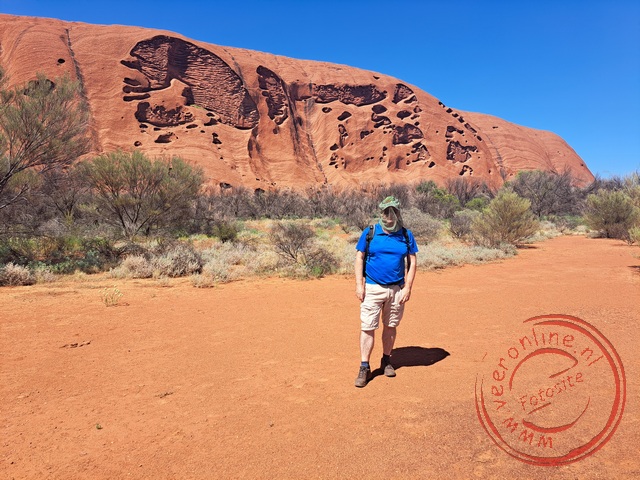
Matt also takes us to a water source fed by rainwater from the rocks. There is still water in the pool today; it rained a few weeks ago. Aboriginal children sometimes swim there. For others, climbing on the rocks is strictly forbidden. After Matt’s explanation, the group splits up. One group goes with Matt to Kata Tjuta or The Olgas, a formation of about thirty rocks. I join the other group to walk around Uluru Rock—a route of just over ten kilometers. It’s still early, and luckily not too hot yet. However, there are many annoying flies. Matt mentioned it will be much worse in a few weeks. I have a fly net with me to cover my head but try to go without it first. Around the rock, many birds fly. The grass parrots fly nervously in groups. The colorful flock of birds stands out beautifully against the orange-red colored rock. In a tree sits a falcon bird of prey. The bird stays still as I photograph it. At some points along the Uluru walk, signs indicate photography is forbidden. These are sacred caves and crevices of the Aboriginals. Of course, I respect this request. There is still plenty of rock left to capture. Up close, all the jagged shapes of the rock are clearly visible.
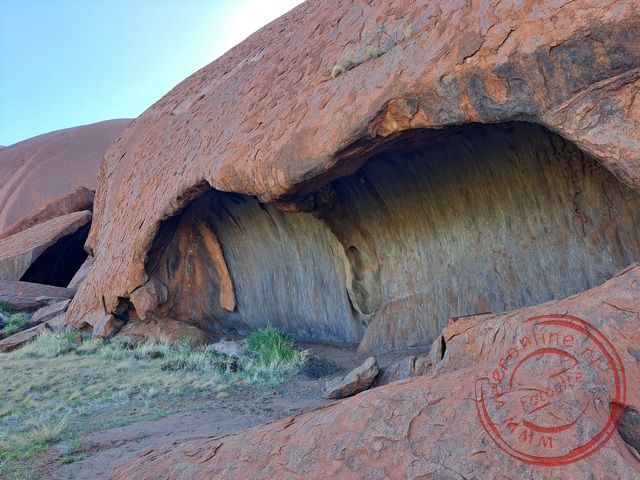
I can hardly imagine that last night from a distance it looked like one big rock block. After exactly two hours, I finish the walk. We walked at a decent pace. Especially towards the end, I began to notice it getting warmer. I look for a shady spot and wait for the bus. An American tourist approaches and asks if we have seen a fanny pack with five passports? Coincidentally, this morning before our walk, we saw people who had found such a pack. They said they would bring it to the visitor center. This reassures the woman somewhat. By bus, we return to Yulara. In the center, I order a sandwich and something to drink. Carefully, I stay in the shade. In the shade, it is already above forty degrees. After lunch, we leave Yulara and the area around Uluru Rock. We first drive about three hours back to the Stuart Highway. Almost everyone closes their eyes for a moment. At the roadside stop where we also stopped two days ago, we take a short break again. I visit the toilet and buy an ice cream. From here, it’s still three hundred kilometers to Alice Springs. Alice Springs arose near a natural passage in the MacDonnell mountain range. This passage was useful when establishing the telegraph connection. Around the Telegraph Station, a settlement grew. Today is Boxing Day in Australia.
This means that supermarkets in Alice Springs close at seven o’clock, as does the resort reception. When entering Alice Springs, we first go to the supermarket to buy food for tomorrow. The supermarket does not sell alcohol. This is sold in the adjacent liquor store. Three officers stand at the door. They check IDs and ask where people are staying. Many, mainly Aboriginals, struggle with alcohol problems in Alice Springs. That is why alcohol is not allowed everywhere. The officers seem to know most local customers already when an elderly Aboriginal man shuffles up. “How was your Christmas?” one of the officers asks him. They probably send him away every day. Before seven o’clock, we arrive at the Desert Palms resort. A park with small cottages. A fine place to stay. For the evening, we receive the gate code in case we go out to eat. We walk a few hundred meters toward the casino. We walk between the slot machines to the restaurant. Besides alcohol, gambling is a second problem in Australia. Nowhere else in the world is so much money spent on gambling. The restaurant turns out to be at the side. We could have gone there directly via the terrace. At the bar, I order a Caesar salad with beer. Because it’s Boxing Day, 15% extra is added to the bill. We don’t have many options because most other restaurants are closed during the summer holidays. The terrace, equipped with huge TV screens, is cooled by misting. This makes it comfortable to sit outside.
 Australia
 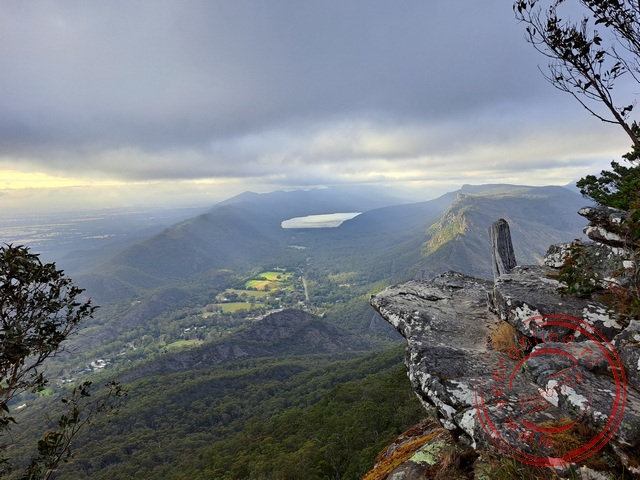 A beautiful view from the Boroka lookout in the Grampians
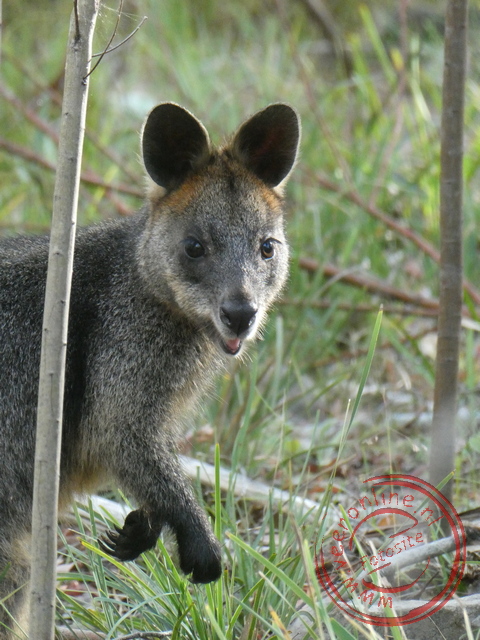 A curious kangaroo at Murrays Falls
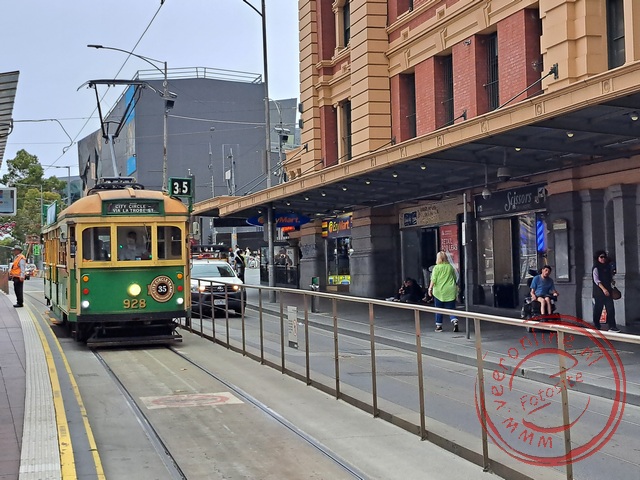 Tram 35 runs around the center of Melbourne
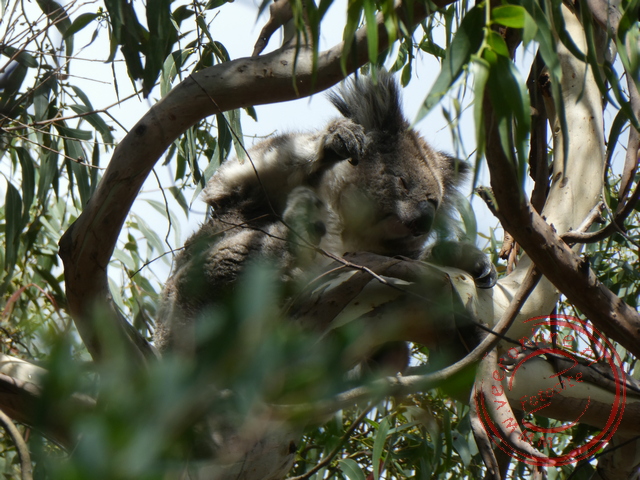 A koala bear in the trees near Kennett River
Travelogue Tour of Australia
Dag 2 | Australia > Arrival in Sydney
Dag 3 | Australia > The Sydney Opera House
Dag 4 | Australia > Walking to Bondi Beach
Dag 5 | Australia > In the Blue Mountains
Dag 6 | Australia > Wineglass Bay in Freycinet
Dag 7 | Australia > The Bay of Fires in Tasmania
Dag 8 | Australia > The Tasmanian Devils
Dag 9 | Australia > Melbourne in Christmas spirit
Dag 10 | Australia > Cycling through Melbourne
Dag 11 | Australia > The Great Ocean Road
Dag 12 | Australia > To the Pinnacle lookout
Dag 13 | Australia > The bus ride to Adelaide
Dag 14 | Australia > A short loop through Adelaide
Dag 15 | Australia > The Wilpena Pound in Flinders Ranges N.P.
Dag 16 | Australia > Sleeping underground in Coober Pedy
Dag 17 | Australia > Christmas at the famous Uluru Rock
Dag 18 | Australia > A walk around Uluru Rock
Dag 19 | Australia > Swimming in the West MacDonnell Ranges
Dag 20 | Australia > Nothing to do in Alice Springs
Dag 21 | Australia > Aboriginal rock art in Kakadu
Dag 22 | Australia > Boating on the Yellow River
Dag 23 | Australia > New Year's Eve in Darwin
Dag 24 | Australia > Early flight to Cairns
Dag 25 | Australia > Snorkeling at Fitzroy Island
Dag 26 | Australia > The Great Barrier Reef
Dag 27 | Australia > The Skyrail cable car to Kuranda
Dag 28 | Australia > Farewell to Cairns
Dag 29 | Australia > The flight from Singapore