
154 countries
(and areas)
 - Belize
- Benin
- Bhutan
- Bolivia
- Bonaire
- Bosnia and Herzegovina
- Botswana
- Brazil
- British Virgin Islands
- Brunei
- Bulgaria
- Cambodia
- Canada
- Cape Verde
- Chile
- China
- Costa Rica
- Croatia
- Cuba
- Curacao
- Cyprus
- Czech Republic
- Denmark
- Dominica
- Dominican Republic
- Egypt
- El Salvador
- England
- Estonia
- Eswatini (Swaziland)
- Ethiopia
- Fiji
- Finland
- France
- French Guiana
- Georgia
- Germany
- Gibraltar
- Greece
- Grenada
- Guadeloupe
- Guatemala
- Honduras
- Hong Kong
- Hungary
- Iceland
- India
- Indonesia
- Iran
- Ireland
- Israel
- Italy
- Jamaica
- Japan
- Jordan
- Kazakhstan
- Kenya
- Kosovo
- Kuwait
- Kyrgyzstan
- Laos
- Latvia
- Lebanon
- Lesotho
- Liechtenstein
- Lithuania
- Luxembourg
- Macau
- Madagascar
- Malawi
- Malaysia
- Maldives
- Malta
- Martinique
- Mexico
- Moldova
- Monaco
- Mongolia
- Montenegro
- Morocco
- Mozambique
- Namibia
- Nepal
- Netherlands
- New Zealand
- Nicaragua
- North Macedonia
- Northern Ireland
- Norway
- Oman
- Pakistan
- Palestine
- Peru
- Philippines
- Poland
- Portugal
- Qatar
- Republic of Korea
- Romania
- Russia
- Saint Kitts and Nevis
- Saint Lucia
- Saint Martin
- Saint Vincent and the Grenadines
- San Marino
- São Tomé and Principe
- Saudi Arabia
- Scotland
- Senegal
- Serbia
- Singapore
- Sint Maarten
- Slovakia
- Slovenia
- South Africa
- Spain
- Sri Lanka
- Suriname
- Sweden
- Switzerland
- Tajikistan
- Tanzania
- Thailand
- The Gambia
- Tibet
- Togo
- Transnistria
- Trinidad and Tobago
- Tunisia
- Turkey
- Turkmenistan
- Uganda
- United Arab Emirates
- United States
- Uruguay
- Uzbekistan
- Vatican City
- Vietnam
- Wales
- Zambia
- Zanzibar
- Belize
- Benin
- Bhutan
- Bolivia
- Bonaire
- Bosnia and Herzegovina
- Botswana
- Brazil
- British Virgin Islands
- Brunei
- Bulgaria
- Cambodia
- Canada
- Cape Verde
- Chile
- China
- Costa Rica
- Croatia
- Cuba
- Curacao
- Cyprus
- Czech Republic
- Denmark
- Dominica
- Dominican Republic
- Egypt
- El Salvador
- England
- Estonia
- Eswatini (Swaziland)
- Ethiopia
- Fiji
- Finland
- France
- French Guiana
- Georgia
- Germany
- Gibraltar
- Greece
- Grenada
- Guadeloupe
- Guatemala
- Honduras
- Hong Kong
- Hungary
- Iceland
- India
- Indonesia
- Iran
- Ireland
- Israel
- Italy
- Jamaica
- Japan
- Jordan
- Kazakhstan
- Kenya
- Kosovo
- Kuwait
- Kyrgyzstan
- Laos
- Latvia
- Lebanon
- Lesotho
- Liechtenstein
- Lithuania
- Luxembourg
- Macau
- Madagascar
- Malawi
- Malaysia
- Maldives
- Malta
- Martinique
- Mexico
- Moldova
- Monaco
- Mongolia
- Montenegro
- Morocco
- Mozambique
- Namibia
- Nepal
- Netherlands
- New Zealand
- Nicaragua
- North Macedonia
- Northern Ireland
- Norway
- Oman
- Pakistan
- Palestine
- Peru
- Philippines
- Poland
- Portugal
- Qatar
- Republic of Korea
- Romania
- Russia
- Saint Kitts and Nevis
- Saint Lucia
- Saint Martin
- Saint Vincent and the Grenadines
- San Marino
- São Tomé and Principe
- Saudi Arabia
- Scotland
- Senegal
- Serbia
- Singapore
- Sint Maarten
- Slovakia
- Slovenia
- South Africa
- Spain
- Sri Lanka
- Suriname
- Sweden
- Switzerland
- Tajikistan
- Tanzania
- Thailand
- The Gambia
- Tibet
- Togo
- Transnistria
- Trinidad and Tobago
- Tunisia
- Turkey
- Turkmenistan
- Uganda
- United Arab Emirates
- United States
- Uruguay
- Uzbekistan
- Vatican City
- Vietnam
- Wales
- Zambia
- Zanzibar


Copyright 2004 - 2026
Veeronline.nl Travel Adventures

Home > Australia > Tour of Australia > Travelogue day 17
Travelogue Tour of Australia
December 9 2023 January 6 2024 (29 days)
Australia > Christmas at the famous Uluru Rock
Dag 17 - Monday, 25 December 2023I wake up to the alarm in the pitch-dark underground room. Today is Christmas. In the shower, I almost immediately have hot water. For a long time, water was a problem in Coober Pedy. Until well into the twentieth century, water was delivered by trucks. Since the end of the last century, water has been pumped in this region. This water, rich in minerals, must be thoroughly purified. Thanks to this, Coober Pedy’s water is good to drink. It even ranks among the best quality water in Australia. It is just relatively expensive due to the extra filtering. At quarter past six, I report back to the bus. Today we set out early again. Just as we leave Coober Pedy and merge onto the Stuart Highway, the sun rises on the horizon. Kim, driving the bus, tells us we are lucky. It has rained quite a bit recently. As a result, the outback is greener. Normally the landscape is much drier than it is now, he continues. In the early hours, the animals are more active again. A red kangaroo jumps aside. The red kangaroo is quite rare and rarely seen. Today, the Stuart Highway is quiet again. Oncoming vehicles can be counted on one hand.
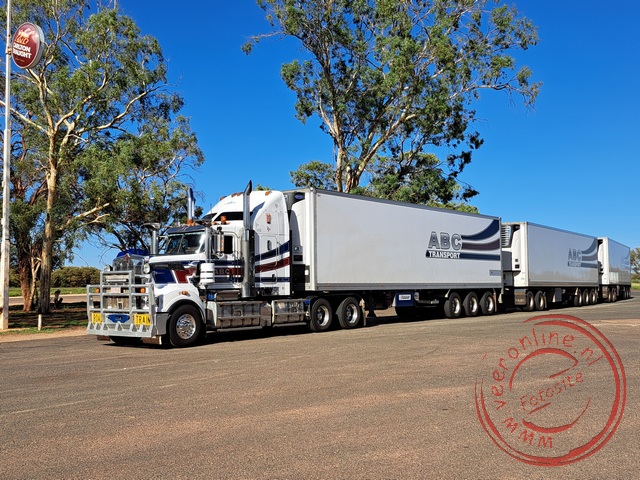
At the first stop, the café is closed for Christmas. At the gas station, I buy a bar to eat. I hadn’t had breakfast this morning. Outside, a road train truck just arrives. The driver parks the huge fifty-meter-long vehicle for a coffee break. We left extra early today because the restaurant at the Uluru turnoff closes at twelve o’clock due to Christmas. Around eleven, we cross the state border between South Australia and the Northern Territory. The Northern Territory does not observe daylight saving time. This means it is one hour earlier here during summer. Because of this, we arrive well on time at the lunch restaurant. I order coffee and a toasted sandwich. While eating my sandwich, I watch the emus. The ostriches gather here and can also be fed. I skip that. The cashier tells me they will celebrate Christmas with the staff this afternoon. Going back home from this remote location is not an option. A festively set table is already prepared. From the turnoff, it’s still a three-hour drive to Uluru. A perfectly straight road through the dry landscape. After a while, a mountain appears on the left side. This is not Uluru Rock yet, the driver emphasizes as he stops the bus. This is Mount Conner, a flattened mesa formed by erosion of the surrounding rock. The Conner rock is 200 million years older than Mount Uluru. The sand dunes here are formed by reddish sand. The iron-containing sand gets its color from rust. I climb the sand dune on the other side. The sand feels warm. At the top, I look out over a salt lake. The white salt contrasts beautifully with the red sand. Around half past two, Mount Uluru—or Ayers Rock, as the rock was formerly called—comes into view. A huge rock formation in the middle of the landscape. For the local Aboriginal people, Uluru is an important religious site. The rock is connected to their mythology, the Tjukurpa. Every facet of the rock has a certain meaning and is connected through the mythology in the Tjukurpa. Certain cracks in the rock are, for the Aboriginals, the remains of a battle between two mythological beings from the Tjukurpa. During colonization, the Aboriginal people were driven from the coasts, sometimes by force and sometimes succumbing to Western diseases. The Aboriginals moved into the dry interior and settled among other places near Uluru. A few dozen kilometers from Uluru lies the village of Yulara. This village is entirely focused on tourists coming to see Uluru. The center has several restaurants and a supermarket. Hotels lie around it. I still have some time to retreat to my room. Some fellow travelers take a dip in the pool.
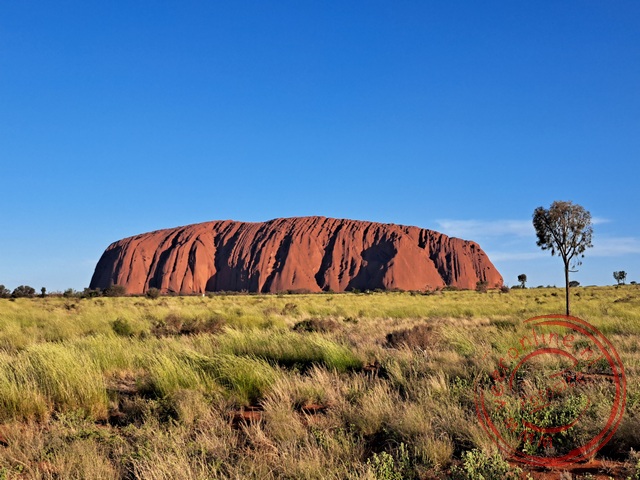
I only take a shower. Around a little past six, I get back on the bus. Kim drives us to Uluru Rock. From a lookout platform, I have a view of Australia’s most famous rock. Behind me, the sun slowly sinks toward the horizon. As the sun sets, the color of Uluru Rock changes—a magnificent sight. I try not to pay attention to the hundreds of people watching. After the last daylight disappears, we drive back to Yulara. At the Gekko restaurant, we have our Christmas meal. The order was placed earlier. The restaurant looks cozier than yesterday’s pizzeria. With beer and a chicken schnitzel, I celebrate Christmas Day. On the table lie Christmas crackers. By pulling on both ends, a small pop reveals a little gift.
 Australia
 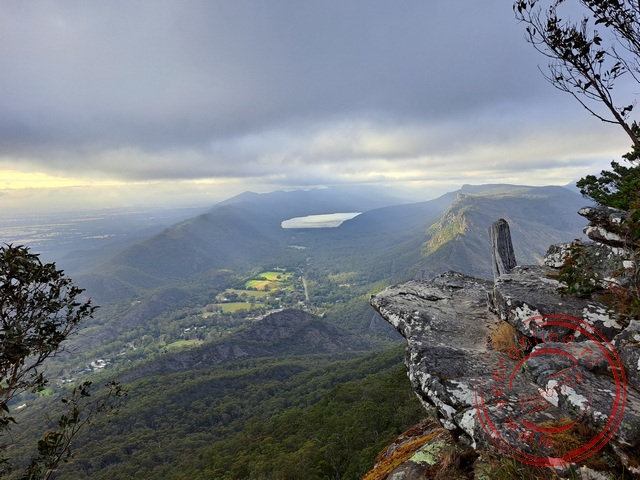 A beautiful view from the Boroka lookout in the Grampians
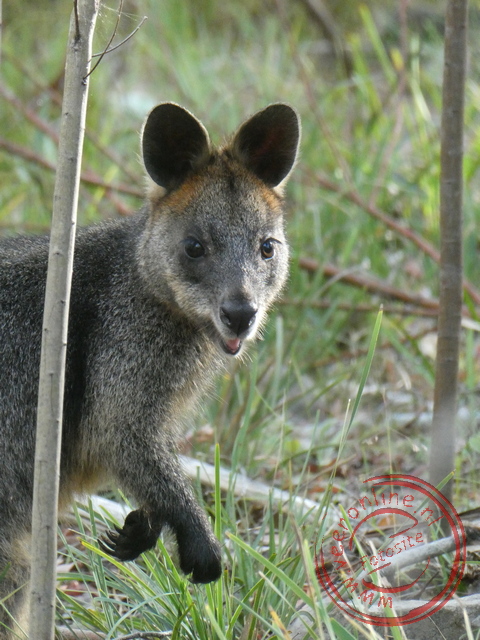 A curious kangaroo at Murrays Falls
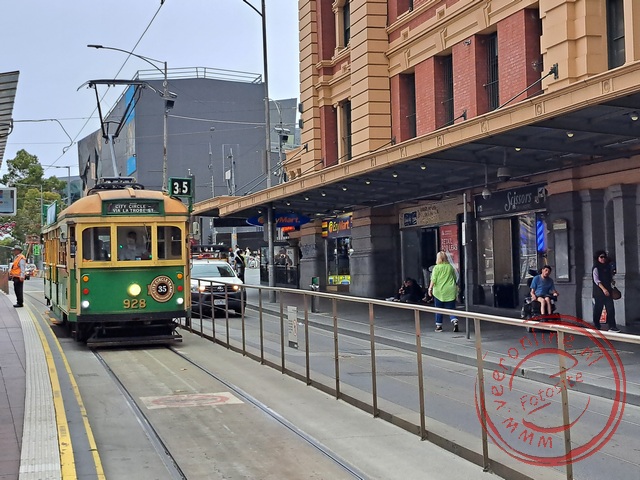 Tram 35 runs around the center of Melbourne
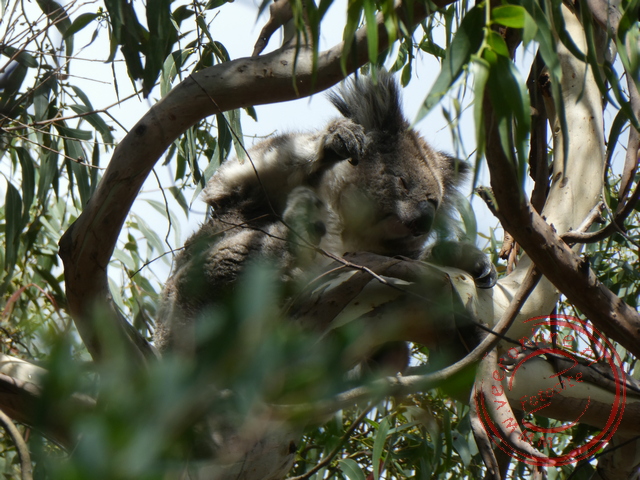 A koala bear in the trees near Kennett River
Travelogue Tour of Australia
Dag 2 | Australia > Arrival in Sydney
Dag 3 | Australia > The Sydney Opera House
Dag 4 | Australia > Walking to Bondi Beach
Dag 5 | Australia > In the Blue Mountains
Dag 6 | Australia > Wineglass Bay in Freycinet
Dag 7 | Australia > The Bay of Fires in Tasmania
Dag 8 | Australia > The Tasmanian Devils
Dag 9 | Australia > Melbourne in Christmas spirit
Dag 10 | Australia > Cycling through Melbourne
Dag 11 | Australia > The Great Ocean Road
Dag 12 | Australia > To the Pinnacle lookout
Dag 13 | Australia > The bus ride to Adelaide
Dag 14 | Australia > A short loop through Adelaide
Dag 15 | Australia > The Wilpena Pound in Flinders Ranges N.P.
Dag 16 | Australia > Sleeping underground in Coober Pedy
Dag 17 | Australia > Christmas at the famous Uluru Rock
Dag 18 | Australia > A walk around Uluru Rock
Dag 19 | Australia > Swimming in the West MacDonnell Ranges
Dag 20 | Australia > Nothing to do in Alice Springs
Dag 21 | Australia > Aboriginal rock art in Kakadu
Dag 22 | Australia > Boating on the Yellow River
Dag 23 | Australia > New Year's Eve in Darwin
Dag 24 | Australia > Early flight to Cairns
Dag 25 | Australia > Snorkeling at Fitzroy Island
Dag 26 | Australia > The Great Barrier Reef
Dag 27 | Australia > The Skyrail cable car to Kuranda
Dag 28 | Australia > Farewell to Cairns
Dag 29 | Australia > The flight from Singapore