
154 countries
(and areas)
 - Azerbaijan
- Bahrain
- Barbados
- Belgium
- Belize
- Benin
- Bhutan
- Bolivia
- Bonaire
- Bosnia and Herzegovina
- Botswana
- Brazil
- British Virgin Islands
- Brunei
- Bulgaria
- Cambodia
- Canada
- Cape Verde
- Chile
- China
- Costa Rica
- Croatia
- Cuba
- Curacao
- Cyprus
- Czech Republic
- Denmark
- Dominica
- Dominican Republic
- Egypt
- El Salvador
- England
- Estonia
- Eswatini (Swaziland)
- Ethiopia
- Fiji
- Finland
- France
- French Guiana
- Georgia
- Germany
- Gibraltar
- Greece
- Grenada
- Guadeloupe
- Guatemala
- Honduras
- Hong Kong
- Hungary
- Iceland
- India
- Indonesia
- Iran
- Ireland
- Israel
- Italy
- Jamaica
- Japan
- Jordan
- Kazakhstan
- Kenya
- Kosovo
- Kuwait
- Kyrgyzstan
- Laos
- Latvia
- Lebanon
- Lesotho
- Liechtenstein
- Lithuania
- Luxembourg
- Macau
- Madagascar
- Malawi
- Malaysia
- Maldives
- Malta
- Martinique
- Mexico
- Moldova
- Monaco
- Mongolia
- Montenegro
- Morocco
- Mozambique
- Namibia
- Nepal
- Netherlands
- New Zealand
- Nicaragua
- North Macedonia
- Northern Ireland
- Norway
- Oman
- Pakistan
- Palestine
- Peru
- Philippines
- Poland
- Portugal
- Qatar
- Republic of Korea
- Romania
- Russia
- Saint Kitts and Nevis
- Saint Lucia
- Saint Martin
- Saint Vincent and the Grenadines
- San Marino
- São Tomé and Principe
- Saudi Arabia
- Scotland
- Senegal
- Serbia
- Singapore
- Sint Maarten
- Slovakia
- Slovenia
- South Africa
- Spain
- Sri Lanka
- Suriname
- Sweden
- Switzerland
- Tajikistan
- Tanzania
- Thailand
- The Gambia
- Tibet
- Togo
- Transnistria
- Trinidad and Tobago
- Tunisia
- Turkey
- Turkmenistan
- Uganda
- United Arab Emirates
- United States
- Uruguay
- Uzbekistan
- Vatican City
- Vietnam
- Wales
- Zambia
- Zanzibar
- Azerbaijan
- Bahrain
- Barbados
- Belgium
- Belize
- Benin
- Bhutan
- Bolivia
- Bonaire
- Bosnia and Herzegovina
- Botswana
- Brazil
- British Virgin Islands
- Brunei
- Bulgaria
- Cambodia
- Canada
- Cape Verde
- Chile
- China
- Costa Rica
- Croatia
- Cuba
- Curacao
- Cyprus
- Czech Republic
- Denmark
- Dominica
- Dominican Republic
- Egypt
- El Salvador
- England
- Estonia
- Eswatini (Swaziland)
- Ethiopia
- Fiji
- Finland
- France
- French Guiana
- Georgia
- Germany
- Gibraltar
- Greece
- Grenada
- Guadeloupe
- Guatemala
- Honduras
- Hong Kong
- Hungary
- Iceland
- India
- Indonesia
- Iran
- Ireland
- Israel
- Italy
- Jamaica
- Japan
- Jordan
- Kazakhstan
- Kenya
- Kosovo
- Kuwait
- Kyrgyzstan
- Laos
- Latvia
- Lebanon
- Lesotho
- Liechtenstein
- Lithuania
- Luxembourg
- Macau
- Madagascar
- Malawi
- Malaysia
- Maldives
- Malta
- Martinique
- Mexico
- Moldova
- Monaco
- Mongolia
- Montenegro
- Morocco
- Mozambique
- Namibia
- Nepal
- Netherlands
- New Zealand
- Nicaragua
- North Macedonia
- Northern Ireland
- Norway
- Oman
- Pakistan
- Palestine
- Peru
- Philippines
- Poland
- Portugal
- Qatar
- Republic of Korea
- Romania
- Russia
- Saint Kitts and Nevis
- Saint Lucia
- Saint Martin
- Saint Vincent and the Grenadines
- San Marino
- São Tomé and Principe
- Saudi Arabia
- Scotland
- Senegal
- Serbia
- Singapore
- Sint Maarten
- Slovakia
- Slovenia
- South Africa
- Spain
- Sri Lanka
- Suriname
- Sweden
- Switzerland
- Tajikistan
- Tanzania
- Thailand
- The Gambia
- Tibet
- Togo
- Transnistria
- Trinidad and Tobago
- Tunisia
- Turkey
- Turkmenistan
- Uganda
- United Arab Emirates
- United States
- Uruguay
- Uzbekistan
- Vatican City
- Vietnam
- Wales
- Zambia
- Zanzibar


Copyright 2004 - 2026
Veeronline.nl Travel Adventures

Home > Italy > City Trip Naples > Travelogue day 3
Travelogue City Trip Naples
February 1417 2019 (4 days)
Italy > Pompeii and Vesuvius
Dag 3 - Saturday, February 16, 2019It’s chilly outside but beautiful weather as we walk out of the hotel. We head toward the train station, following Corso Umberto I to Piazza Nicola Amore. From there, we wind through narrow streets to reach the station. The streetscape feels completely different. Along the main road, there are mainly luxury shops, while the neighborhood behind it resembles an Arab-style working-class area—small, crowded shops, laundry hanging from tiny balconies, and walls covered in graffiti. Cars squeeze through the narrow streets. It looks chaotic. At the station, we buy tickets for Pompeii. Each ticket is printed individually. Meanwhile, the ticket clerk is mostly preoccupied with her nails. The train departs at 9:39 a.m. The next stop is Naples’ main station, where many tourists are waiting to board. It’s good that we got on one stop earlier. The train runs along the coast. On the left, Vesuvius rises high above the houses. The train stops at all the intermediate stations. After forty minutes, we arrive at Scavi Pompeii station. The train empties completely. We also get off and follow the crowd toward the entrance of ancient Pompeii. Around the beginning of the Common Era, Pompeii was an important Roman city with 20,000 inhabitants. In 79 AD, the city was buried under a four-meter-thick layer of volcanic ash due to a devastating eruption of Vesuvius. The city’s remnants were only rediscovered at the end of the 16th century, with actual excavations starting in the second half of the 19th century. Archaeologists also found the remains of the inhabitants within the ash.

From their poses, it was clear they were completely caught by surprise by the eruption; many were asleep. We now see present-day Pompeii before us. The street layout and houses are well preserved. The Forum forms the main square of the ancient Roman city, surrounded by houses, temples, and bathhouses. Some houses still have their mosaic floors intact. On the far side of the city lies the Amphitheater of Pompeii. This stone theater was built around 80 BC for gladiatorial games. Thanks to the eruption and its covering in volcanic ash, it is one of the best-preserved Roman theaters of its time. By midday, we have explored the town. From Pompeii, a local bus goes to Vesuvius. The next bus leaves around 1:00 p.m. We quickly buy a sandwich and walk to the stop. The driver signals us to just get on; payment comes later, as we understand. The bus heads toward the volcano. At the foot of the mountain, a winding road begins. At every turn, the driver honks loudly to warn oncoming traffic. Then comes a wide bend upward. The view of Naples becomes more beautiful with each turn. Halfway up, the driver stops the bus. “Photo, photo,” he says. Everyone gets out to take a picture of Naples and the harbor. The driver also points out the hardened lava from the last eruption in 1944. Back on the bus, he collects the tickets for the ride. The bus is still parked along the side of the mountain road, halfway up Vesuvius—a remarkable spot.
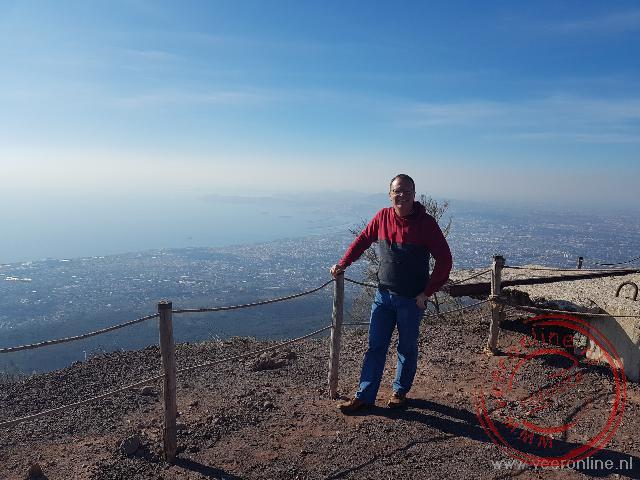
A few bends later, the bus stops again. This time we can purchase an entrance ticket to Vesuvius National Park. The park entrance itself is about 300 meters further. Here, everyone gets off the bus for the last time. From the National Park entrance, a trail climbs the volcano’s slope. The path goes uphill quite steeply. To the right is a view of Naples, over a thousand meters below. To the left, the volcano’s crater grows closer and closer. Occasionally, a small stone rolls down the slope. You have to stay alert. After about half an hour, we reach the crater of Vesuvius. Only a small plume of smoke indicates volcanic activity. It is incredible to stand atop the famous Vesuvius, enjoying the crater and the stunning view. The descent is much easier. At the parking area, the return transport is unclear. A public bus can take us back to Pompeii, from where we can catch the train back to Naples. This is a longer route. Private minibuses take guests directly to Naples, but a taxi driver asks an exorbitant price. We decide against it, choosing to return by bus and train. In just over half an hour, we are back in Pompeii. Since the train is about to depart and we don’t feel like rushing, we first order a drink. From the terrace, we see the train is delayed. Half an hour later, we board the next train to Naples. Outside, twilight falls. The sun casts its last rays on Vesuvius before setting into the sea. Just before six o’clock, we are back in Naples. Near the hotel, we stop for a drink, then walk to the Spanish Quarter. In a side street off Via Toledo, we end the day at a restaurant.
 Italy
Italy  A bathtub in one of the houses in Pompeii
 The Santa Chiara monastery in the old city
 The chapel of San Gennaro in the Duomo di Napoli
 The Palazzo Reale di Napoli
Travelogue City Trip Naples
Dag 2 | Italy > Birthday in Naples
Dag 3 | Italy > Pompeii and Vesuvius
Dag 4 | Italy > The old district of Naples