
154 countries
(and areas)
 - Azerbaijan
- Bahrain
- Barbados
- Belgium
- Belize
- Benin
- Bhutan
- Bolivia
- Bonaire
- Bosnia and Herzegovina
- Botswana
- Brazil
- British Virgin Islands
- Brunei
- Bulgaria
- Cambodia
- Canada
- Cape Verde
- Chile
- China
- Costa Rica
- Croatia
- Cuba
- Curacao
- Cyprus
- Czech Republic
- Denmark
- Dominica
- Dominican Republic
- Egypt
- El Salvador
- England
- Estonia
- Eswatini (Swaziland)
- Ethiopia
- Fiji
- Finland
- France
- French Guiana
- Georgia
- Germany
- Gibraltar
- Greece
- Grenada
- Guadeloupe
- Guatemala
- Honduras
- Hong Kong
- Hungary
- Iceland
- India
- Indonesia
- Iran
- Ireland
- Israel
- Italy
- Jamaica
- Japan
- Jordan
- Kazakhstan
- Kenya
- Kosovo
- Kuwait
- Kyrgyzstan
- Laos
- Latvia
- Lebanon
- Lesotho
- Liechtenstein
- Lithuania
- Luxembourg
- Macau
- Madagascar
- Malawi
- Malaysia
- Maldives
- Malta
- Martinique
- Mexico
- Moldova
- Monaco
- Mongolia
- Montenegro
- Morocco
- Mozambique
- Namibia
- Nepal
- Netherlands
- New Zealand
- Nicaragua
- North Macedonia
- Northern Ireland
- Norway
- Oman
- Pakistan
- Palestine
- Peru
- Philippines
- Poland
- Portugal
- Qatar
- Republic of Korea
- Romania
- Russia
- Saint Kitts and Nevis
- Saint Lucia
- Saint Martin
- Saint Vincent and the Grenadines
- San Marino
- São Tomé and Principe
- Saudi Arabia
- Scotland
- Senegal
- Serbia
- Singapore
- Sint Maarten
- Slovakia
- Slovenia
- South Africa
- Spain
- Sri Lanka
- Suriname
- Sweden
- Switzerland
- Tajikistan
- Tanzania
- Thailand
- The Gambia
- Tibet
- Togo
- Transnistria
- Trinidad and Tobago
- Tunisia
- Turkey
- Turkmenistan
- Uganda
- United Arab Emirates
- United States
- Uruguay
- Uzbekistan
- Vatican City
- Vietnam
- Wales
- Zambia
- Zanzibar
- Azerbaijan
- Bahrain
- Barbados
- Belgium
- Belize
- Benin
- Bhutan
- Bolivia
- Bonaire
- Bosnia and Herzegovina
- Botswana
- Brazil
- British Virgin Islands
- Brunei
- Bulgaria
- Cambodia
- Canada
- Cape Verde
- Chile
- China
- Costa Rica
- Croatia
- Cuba
- Curacao
- Cyprus
- Czech Republic
- Denmark
- Dominica
- Dominican Republic
- Egypt
- El Salvador
- England
- Estonia
- Eswatini (Swaziland)
- Ethiopia
- Fiji
- Finland
- France
- French Guiana
- Georgia
- Germany
- Gibraltar
- Greece
- Grenada
- Guadeloupe
- Guatemala
- Honduras
- Hong Kong
- Hungary
- Iceland
- India
- Indonesia
- Iran
- Ireland
- Israel
- Italy
- Jamaica
- Japan
- Jordan
- Kazakhstan
- Kenya
- Kosovo
- Kuwait
- Kyrgyzstan
- Laos
- Latvia
- Lebanon
- Lesotho
- Liechtenstein
- Lithuania
- Luxembourg
- Macau
- Madagascar
- Malawi
- Malaysia
- Maldives
- Malta
- Martinique
- Mexico
- Moldova
- Monaco
- Mongolia
- Montenegro
- Morocco
- Mozambique
- Namibia
- Nepal
- Netherlands
- New Zealand
- Nicaragua
- North Macedonia
- Northern Ireland
- Norway
- Oman
- Pakistan
- Palestine
- Peru
- Philippines
- Poland
- Portugal
- Qatar
- Republic of Korea
- Romania
- Russia
- Saint Kitts and Nevis
- Saint Lucia
- Saint Martin
- Saint Vincent and the Grenadines
- San Marino
- São Tomé and Principe
- Saudi Arabia
- Scotland
- Senegal
- Serbia
- Singapore
- Sint Maarten
- Slovakia
- Slovenia
- South Africa
- Spain
- Sri Lanka
- Suriname
- Sweden
- Switzerland
- Tajikistan
- Tanzania
- Thailand
- The Gambia
- Tibet
- Togo
- Transnistria
- Trinidad and Tobago
- Tunisia
- Turkey
- Turkmenistan
- Uganda
- United Arab Emirates
- United States
- Uruguay
- Uzbekistan
- Vatican City
- Vietnam
- Wales
- Zambia
- Zanzibar


Copyright 2004 - 2026
Veeronline.nl Travel Adventures

Home > Italy > City Trip Naples > Travelogue day 2
Travelogue City Trip Naples
February 1417 2019 (4 days)
Italy > Birthday in Naples
Dag 2 - Friday, February 15, 2019In the breakfast room, we meet Rita. It’s her birthday today—she has turned eighty. We congratulate her. The small breakfast area is a bit of a squeeze. Inside, there are four tables; outside, three more. After breakfast, we stroll into Naples. Beneath the glass dome of the Galleria Umberto I, we order coffee with pastries. A beautiful location to celebrate a birthday. The shopping arcade, with its stunning glass ceiling, was built at the end of the 19th century and is listed as a UNESCO World Heritage site. Just past the arcade lies Piazza del Plebiscito, the city’s main square. On one side stands the Palazzo Reale di Napoli, and on the other, the Basilica Reale Pontificia.

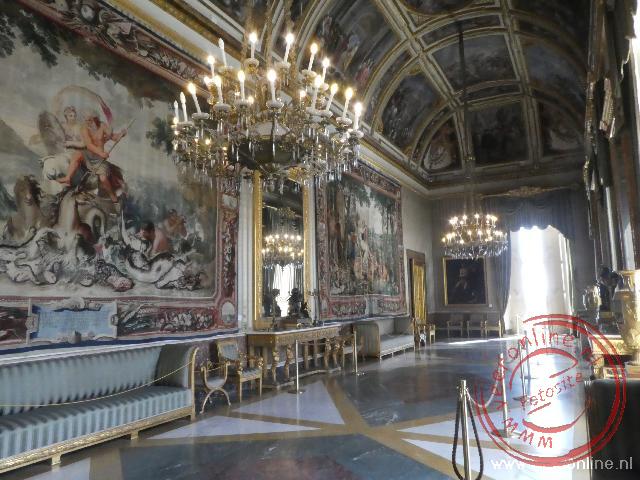
The church resembles the Pantheon in Rome. Its façade consists of pillars, above which rises the 53-meter-high dome. Originally, the building was meant to honor Emperor Napoleon. After Napoleon’s expulsion in the early 19th century, construction continued under King Ferdinand I, who dedicated the church to Saint Francis of Paola. On the opposite side of the square is the royal palace. Through the tall entrance gate, we enter the palace. A grand double marble staircase leads to the first floor, where the royal suites are located. Gorgeous marble floors, colorful wall decorations, enormous paintings, and golden chandeliers fill each room. Every chamber is a jewel to behold. The royal throne dates back to 1850. Groups of children also visit the palace, all dressed formally. Whether this is specifically for the visit or in preparation for Carnival is unclear. From the palace, we walk to the promenade. Across the bay, Mount Vesuvius rises. The 1,281-meter-high volcano stands out beautifully against the clear blue sky. We settle at a terrace with a view of the impressive volcano, ordering drinks and a light snack. The sun shines, but the wind makes it quite chilly. After lunch, we continue to Castel Nuovo. This medieval castle sits by the water, and its five massive towers immediately catch the eye.
Inside, the Barons’ Hall is the most remarkable feature. King Ferdinand I invited rebellious barons to the castle for a celebration—but instead of a party, he had them arrested in the Barons’ Hall. One wing houses the Museo Civico with various artworks. The upper floors of the museum can only be reached by a small, slow elevator; the staircase is closed—strange. From the balustrade on the third floor, we have views over the city and harbor. Unfortunately, we cannot enter any of the towers. We wander back to the hotel through narrow streets. In a café next to the hotel, we enjoy a drink. In the restaurant opposite, we have dinner. A lovely end to a birthday day.
 Italy
Italy  A bathtub in one of the houses in Pompeii
 The Santa Chiara monastery in the old city
 The chapel of San Gennaro in the Duomo di Napoli
 The Palazzo Reale di Napoli
Travelogue City Trip Naples
Dag 2 | Italy > Birthday in Naples
Dag 3 | Italy > Pompeii and Vesuvius
Dag 4 | Italy > The old district of Naples