
154 countries
(and areas)
 - Belize
- Benin
- Bhutan
- Bolivia
- Bonaire
- Bosnia and Herzegovina
- Botswana
- Brazil
- British Virgin Islands
- Brunei
- Bulgaria
- Cambodia
- Canada
- Cape Verde
- Chile
- China
- Costa Rica
- Croatia
- Cuba
- Curacao
- Cyprus
- Czech Republic
- Denmark
- Dominica
- Dominican Republic
- Egypt
- El Salvador
- England
- Estonia
- Eswatini (Swaziland)
- Ethiopia
- Fiji
- Finland
- France
- French Guiana
- Georgia
- Germany
- Gibraltar
- Greece
- Grenada
- Guadeloupe
- Guatemala
- Honduras
- Hong Kong
- Hungary
- Iceland
- India
- Indonesia
- Iran
- Ireland
- Israel
- Italy
- Jamaica
- Japan
- Jordan
- Kazakhstan
- Kenya
- Kosovo
- Kuwait
- Kyrgyzstan
- Laos
- Latvia
- Lebanon
- Lesotho
- Liechtenstein
- Lithuania
- Luxembourg
- Macau
- Madagascar
- Malawi
- Malaysia
- Maldives
- Malta
- Martinique
- Mexico
- Moldova
- Monaco
- Mongolia
- Montenegro
- Morocco
- Mozambique
- Namibia
- Nepal
- Netherlands
- New Zealand
- Nicaragua
- North Macedonia
- Northern Ireland
- Norway
- Oman
- Pakistan
- Palestine
- Peru
- Philippines
- Poland
- Portugal
- Qatar
- Republic of Korea
- Romania
- Russia
- Saint Kitts and Nevis
- Saint Lucia
- Saint Martin
- Saint Vincent and the Grenadines
- San Marino
- São Tomé and Principe
- Saudi Arabia
- Scotland
- Senegal
- Serbia
- Singapore
- Sint Maarten
- Slovakia
- Slovenia
- South Africa
- Spain
- Sri Lanka
- Suriname
- Sweden
- Switzerland
- Tajikistan
- Tanzania
- Thailand
- The Gambia
- Tibet
- Togo
- Transnistria
- Trinidad and Tobago
- Tunisia
- Turkey
- Turkmenistan
- Uganda
- United Arab Emirates
- United States
- Uruguay
- Uzbekistan
- Vatican City
- Vietnam
- Wales
- Zambia
- Zanzibar
- Belize
- Benin
- Bhutan
- Bolivia
- Bonaire
- Bosnia and Herzegovina
- Botswana
- Brazil
- British Virgin Islands
- Brunei
- Bulgaria
- Cambodia
- Canada
- Cape Verde
- Chile
- China
- Costa Rica
- Croatia
- Cuba
- Curacao
- Cyprus
- Czech Republic
- Denmark
- Dominica
- Dominican Republic
- Egypt
- El Salvador
- England
- Estonia
- Eswatini (Swaziland)
- Ethiopia
- Fiji
- Finland
- France
- French Guiana
- Georgia
- Germany
- Gibraltar
- Greece
- Grenada
- Guadeloupe
- Guatemala
- Honduras
- Hong Kong
- Hungary
- Iceland
- India
- Indonesia
- Iran
- Ireland
- Israel
- Italy
- Jamaica
- Japan
- Jordan
- Kazakhstan
- Kenya
- Kosovo
- Kuwait
- Kyrgyzstan
- Laos
- Latvia
- Lebanon
- Lesotho
- Liechtenstein
- Lithuania
- Luxembourg
- Macau
- Madagascar
- Malawi
- Malaysia
- Maldives
- Malta
- Martinique
- Mexico
- Moldova
- Monaco
- Mongolia
- Montenegro
- Morocco
- Mozambique
- Namibia
- Nepal
- Netherlands
- New Zealand
- Nicaragua
- North Macedonia
- Northern Ireland
- Norway
- Oman
- Pakistan
- Palestine
- Peru
- Philippines
- Poland
- Portugal
- Qatar
- Republic of Korea
- Romania
- Russia
- Saint Kitts and Nevis
- Saint Lucia
- Saint Martin
- Saint Vincent and the Grenadines
- San Marino
- São Tomé and Principe
- Saudi Arabia
- Scotland
- Senegal
- Serbia
- Singapore
- Sint Maarten
- Slovakia
- Slovenia
- South Africa
- Spain
- Sri Lanka
- Suriname
- Sweden
- Switzerland
- Tajikistan
- Tanzania
- Thailand
- The Gambia
- Tibet
- Togo
- Transnistria
- Trinidad and Tobago
- Tunisia
- Turkey
- Turkmenistan
- Uganda
- United Arab Emirates
- United States
- Uruguay
- Uzbekistan
- Vatican City
- Vietnam
- Wales
- Zambia
- Zanzibar


Copyright 2004 - 2026
Veeronline.nl Travel Adventures

Home > Algeria > Through the desert of Algeria > Travelogue day 7
Travelogue Through the desert of Algeria
November 8-22, 2025 (15 days)
Algeria > The Cities of the M'Zab Valley
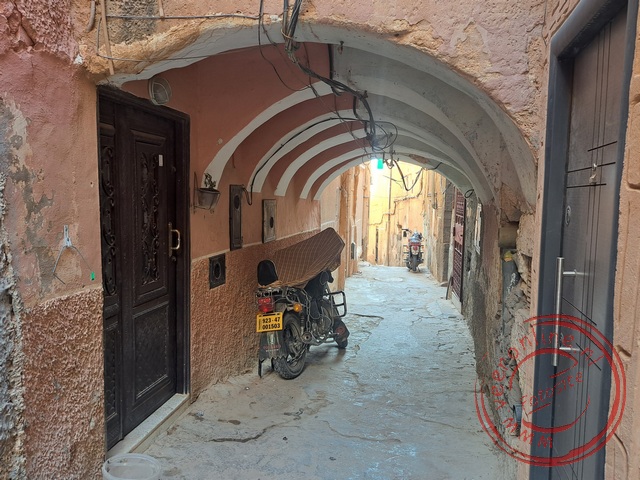
Dag 7 - Friday, 14 November 2025After breakfast, we set out to explore Ghardaïa and its surroundings. Ghardaïa is a Berber oasis town and forms the heart of the M’Zab Valley. Nearby are the fortified sister towns of Melika, Beni Isguen, Bounoura, and El Atteuf. First, we visit the oldest of the five towns: El Atteuf, founded in 1012. The town was later expanded several times with walled districts. Hoessein, our guide for today, emphasizes not to take photos of the people, as this is frowned upon—especially the women dressed entirely in white veils. According to local tradition, they are fully covered, with only one eye visible. It looks quite striking, even more extreme than a burqa or niqab. In El Atteuf, we meet Isa, the local guide. He leads us through the narrow, often covered streets and alleys. Steps take us higher into the town; the higher we go, the older the neighborhoods, he explains. The houses are still inhabited, and every street is picturesque. It’s no wonder the M’Zab Valley is on the UNESCO World Heritage List. At the top of the town stands the old mosque of El Atteuf.
The door is closed, but I can see the mud-brick minaret. “The tower tapers to resist the wind,” Isa explains. Nearby, we visit a traditional house. Dozens of shoes lie outside, indicating a group of twenty children inside, attentively listening to an explanation. Their attention shifts when we enter. Isa continues his story through theirs, which feels a bit awkward. Once the children leave, we can take photos. Isa points out a narrow slit through which women can look outside without being seen. Women have little say here. At the town’s edge is the old cemetery. A double stone on one side indicates whether it’s a man or woman. It looks somewhat chaotic. The new cemetery is outside the town, Isa explains. At the bottom of the hill is the Sidi Brahim Mosque, one of the oldest religious buildings in the M’Zab Valley, made of mud and lime plaster, with soft, rounded shapes and a striking minaret.
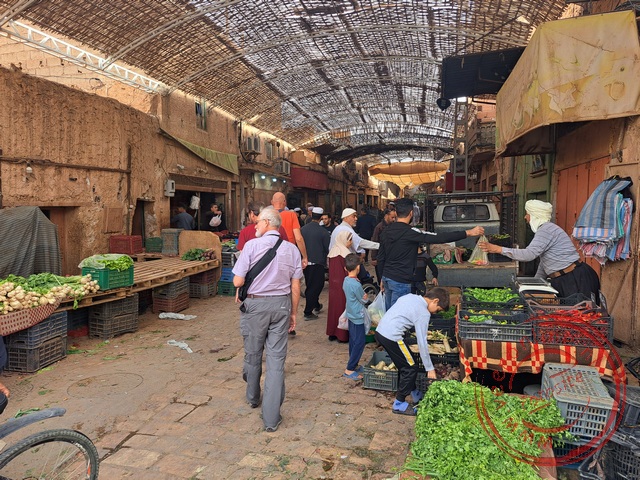
We wait briefly for a family to finish praying; here too, women pray separately in a small enclosed area. After El Atteuf, we drive to Ghardaïa, stopping at a viewpoint overlooking Bounoura. In Ghardaïa, we visit the market. Hoessein repeatedly explains that Fridays are very quiet due to the Friday prayer, yet a few stalls and shops are open. We follow him through the covered shopping streets. At a butcher’s, a camel’s head lies on the counter, likely part of the meat sold there. For lunch, we stop at a small kebab restaurant. Like yesterday, it’s chaotic. A table is moved for us, though it’s unclear why it must be in front of the kitchen door. I order two chicken skewers with fries. Later, two chicken legs arrive, which is too much, so they are sent back. When we try to pay, the waiter seems confused and says, “Later. I have to pray first.” We don’t wait and plan to return this afternoon to pay, Hoessein suggests. We then drive to Beni Isguen, the hometown of Mustafa and Hoessein. Here too, we are only allowed to walk with a guide.
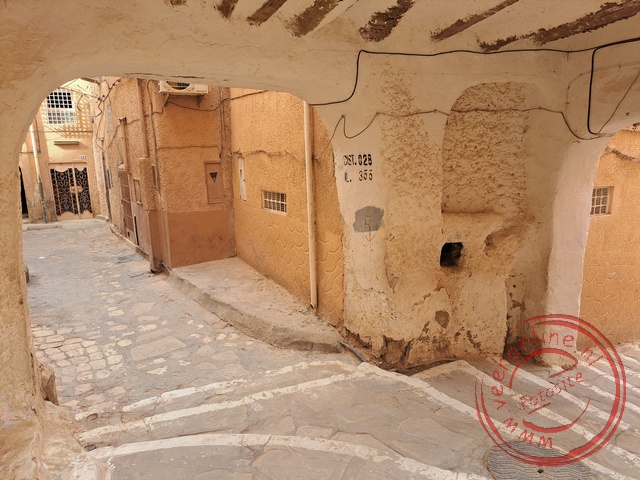
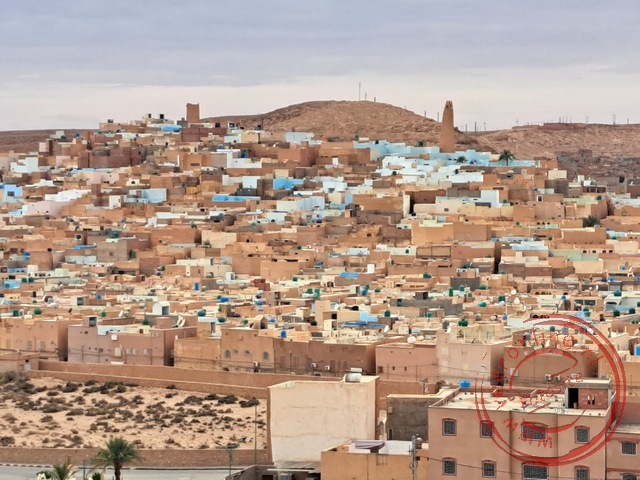
Since Hoessein is from the town, he leads us. We start at a small museum and then wander through narrow streets leading to the oldest part of town. Every street looks picturesque. At the top, we have a view over the valley and surrounding towns—a truly special environment. Before returning to the restaurant to pay, we visit a modern district of Beni Isguen, where new houses are built in traditional style. Hoessein emphasizes that only locals may live here; other Algerians reside outside the walled districts. By around 3:30 p.m., we return to our hotel. There are few nearby restaurants. Just leaving the walled hotel grounds and hospital requires walking almost 1,500 meters to the gate. It’s difficult to determine if the restaurants seen on Google still exist or are good. We decide to keep it simple and eat at the hotel. For precaution, we count our remaining money. Today seems fine, but tomorrow in Algiers we’ll need to exchange money again. It’s hard to estimate how much we’ll need for the coming week. For dinner, I choose chicken soup and a leg of lamb, which tastes surprisingly good. Afterwards, I go to bed early—tomorrow we must rise early.
 Algeria
 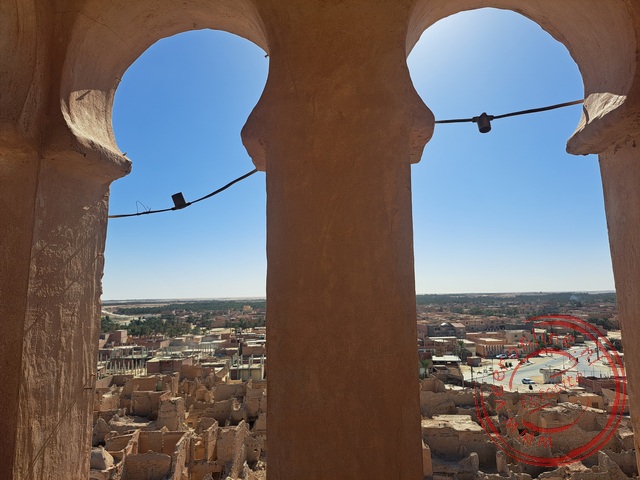 View over the old adobe town of Tamacine
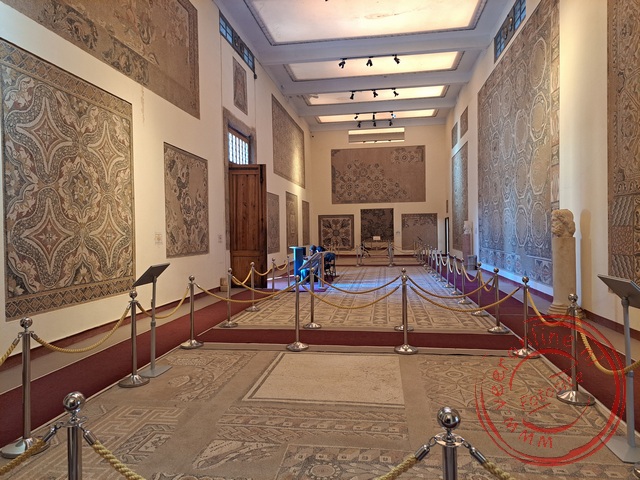 The ancient mosaics in the museum at Timgad
 The ancient Roman entrance gate of Djemila
 The covered streets provide shade in summer
Travelogue Through the desert of Algeria
Dag 2 | Algeria > The old city of Djemila
Dag 3 | Algeria > The Bridges of Constantine
Dag 4 | Algeria > Timgad, Pompeii of Africa
Dag 5 | Algeria > Old Mosque in Sidi Okba
Dag 6 | Algeria > Ghardaïa in the Desert
Dag 7 | Algeria > The Cities of the M'Zab Valley
Dag 8 | Algeria > The Casbah of Algiers
Dag 9 | Algeria > The Roman City of Tipaza
Dag 10 | Algeria > Tassili N'Ajjer National Park
Dag 11 | Algeria > Rock Art in the Desert
Dag 12 | Algeria > Driving Between Rock Formations
Dag 13 | Algeria > Last Day in the Desert
Dag 14 | Algeria > Back in Djanet
Dag 15 | Algeria > Again No Luggage