
154 countries
(and areas)
 - Belize
- Benin
- Bhutan
- Bolivia
- Bonaire
- Bosnia and Herzegovina
- Botswana
- Brazil
- British Virgin Islands
- Brunei
- Bulgaria
- Cambodia
- Canada
- Cape Verde
- Chile
- China
- Costa Rica
- Croatia
- Cuba
- Curacao
- Cyprus
- Czech Republic
- Denmark
- Dominica
- Dominican Republic
- Egypt
- El Salvador
- England
- Estonia
- Eswatini (Swaziland)
- Ethiopia
- Fiji
- Finland
- France
- French Guiana
- Georgia
- Germany
- Gibraltar
- Greece
- Grenada
- Guadeloupe
- Guatemala
- Honduras
- Hong Kong
- Hungary
- Iceland
- India
- Indonesia
- Iran
- Ireland
- Israel
- Italy
- Jamaica
- Japan
- Jordan
- Kazakhstan
- Kenya
- Kosovo
- Kuwait
- Kyrgyzstan
- Laos
- Latvia
- Lebanon
- Lesotho
- Liechtenstein
- Lithuania
- Luxembourg
- Macau
- Madagascar
- Malawi
- Malaysia
- Maldives
- Malta
- Martinique
- Mexico
- Moldova
- Monaco
- Mongolia
- Montenegro
- Morocco
- Mozambique
- Namibia
- Nepal
- Netherlands
- New Zealand
- Nicaragua
- North Macedonia
- Northern Ireland
- Norway
- Oman
- Pakistan
- Palestine
- Peru
- Philippines
- Poland
- Portugal
- Qatar
- Republic of Korea
- Romania
- Russia
- Saint Kitts and Nevis
- Saint Lucia
- Saint Martin
- Saint Vincent and the Grenadines
- San Marino
- São Tomé and Principe
- Saudi Arabia
- Scotland
- Senegal
- Serbia
- Singapore
- Sint Maarten
- Slovakia
- Slovenia
- South Africa
- Spain
- Sri Lanka
- Suriname
- Sweden
- Switzerland
- Tajikistan
- Tanzania
- Thailand
- The Gambia
- Tibet
- Togo
- Transnistria
- Trinidad and Tobago
- Tunisia
- Turkey
- Turkmenistan
- Uganda
- United Arab Emirates
- United States
- Uruguay
- Uzbekistan
- Vatican City
- Vietnam
- Wales
- Zambia
- Zanzibar
- Belize
- Benin
- Bhutan
- Bolivia
- Bonaire
- Bosnia and Herzegovina
- Botswana
- Brazil
- British Virgin Islands
- Brunei
- Bulgaria
- Cambodia
- Canada
- Cape Verde
- Chile
- China
- Costa Rica
- Croatia
- Cuba
- Curacao
- Cyprus
- Czech Republic
- Denmark
- Dominica
- Dominican Republic
- Egypt
- El Salvador
- England
- Estonia
- Eswatini (Swaziland)
- Ethiopia
- Fiji
- Finland
- France
- French Guiana
- Georgia
- Germany
- Gibraltar
- Greece
- Grenada
- Guadeloupe
- Guatemala
- Honduras
- Hong Kong
- Hungary
- Iceland
- India
- Indonesia
- Iran
- Ireland
- Israel
- Italy
- Jamaica
- Japan
- Jordan
- Kazakhstan
- Kenya
- Kosovo
- Kuwait
- Kyrgyzstan
- Laos
- Latvia
- Lebanon
- Lesotho
- Liechtenstein
- Lithuania
- Luxembourg
- Macau
- Madagascar
- Malawi
- Malaysia
- Maldives
- Malta
- Martinique
- Mexico
- Moldova
- Monaco
- Mongolia
- Montenegro
- Morocco
- Mozambique
- Namibia
- Nepal
- Netherlands
- New Zealand
- Nicaragua
- North Macedonia
- Northern Ireland
- Norway
- Oman
- Pakistan
- Palestine
- Peru
- Philippines
- Poland
- Portugal
- Qatar
- Republic of Korea
- Romania
- Russia
- Saint Kitts and Nevis
- Saint Lucia
- Saint Martin
- Saint Vincent and the Grenadines
- San Marino
- São Tomé and Principe
- Saudi Arabia
- Scotland
- Senegal
- Serbia
- Singapore
- Sint Maarten
- Slovakia
- Slovenia
- South Africa
- Spain
- Sri Lanka
- Suriname
- Sweden
- Switzerland
- Tajikistan
- Tanzania
- Thailand
- The Gambia
- Tibet
- Togo
- Transnistria
- Trinidad and Tobago
- Tunisia
- Turkey
- Turkmenistan
- Uganda
- United Arab Emirates
- United States
- Uruguay
- Uzbekistan
- Vatican City
- Vietnam
- Wales
- Zambia
- Zanzibar


Copyright 2004 - 2026
Veeronline.nl Travel Adventures

Home > Algeria > Through the desert of Algeria > Travelogue day 4
Travelogue Through the desert of Algeria
November 8-22, 2025 (15 days)
Algeria > Timgad, Pompeii of Africa
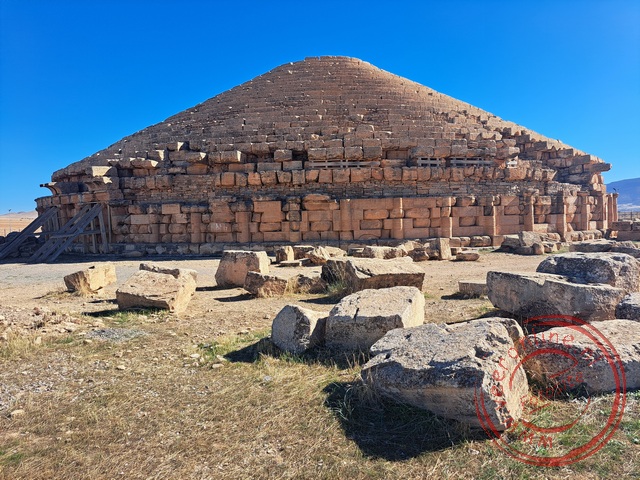
Dag 4 - Tuesday, 11 November 2025After breakfast, we head back to the airport. Could Milko’s travel bag have arrived? Honestly, I had more confidence in it last night. Now it seems no one knows where the suitcase is. The driver remains optimistic. “Last night there were two flights, and this morning at 7:00 a.m. there was one,” he says cheerfully. “The bag has to be on one of those.” To Milko’s great relief, he is right. The travel bag has arrived. With all the luggage on board, we set off for Biskra today—a long drive. Along the way, we make several stops. The first stop, after about two hours, is at a small café. I didn’t like the coffee yesterday, so I order a soft drink instead. Next, we arrive at the Mausoleum of Medghacen. This is a royal tomb dating from the 3rd century BC and is considered the oldest known Numidian mausoleum. The structure is circular with a diameter of over 58 meters. Medghacen presumably served as the burial site for Numidian kings. The restoration looks rather basic, with the stones seemingly placed loosely on the pyramid. Just after noon, we arrive in Timgad, a large Roman archaeological site.
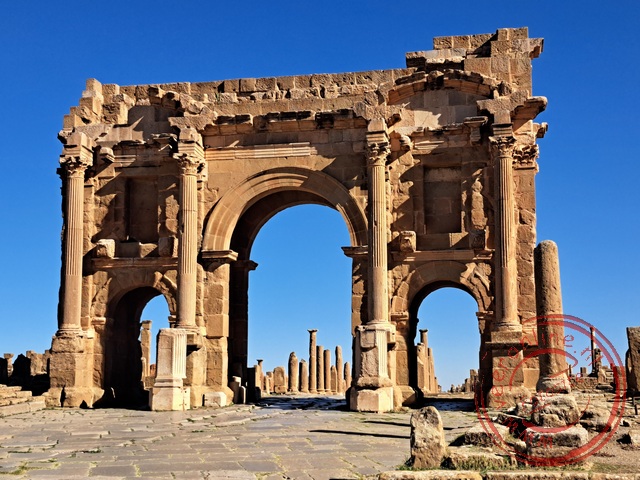
It is the best-preserved Roman city in this region. Because parts of the ruins were buried under a thick layer of desert sand, this city is sometimes called the “Pompeii of Africa.” Hamid is our guide through Timgad. He meets us at the entrance and leads us along the old Roman roads through the complex. He shows us the ancient library, the various marketplaces, and many remnants of houses. At the very back of the complex lies the old amphitheater. The acoustics are perfect if you stand in the center. The theater could hold over 3,000 people. Via the Temple of Jupiter and the Trajan Arch (Arc de Trajan), we reach the museum, which displays impressive mosaics found on the site. Near the archaeological site, the driver knows a good and simple restaurant. In the display case are various prepared dishes. I point to some chicken with pasta and take a drink from the fridge. By now, it is already three o’clock as we drive through the mountains towards Biskra.
The driver drives energetically, taking every opportunity to overtake slower vehicles. Even in towns, he skillfully maneuvers the car through traffic. Here, it doesn’t seem to matter who has the right of way—it’s whoever is boldest. That often seems to be us. Yet the driver does not give the impression of driving dangerously; he reads the traffic well and anticipates accordingly, even while using his phone or recording something in a translation app for us. Late in the afternoon, we arrive at the Ghoufi Balconies. Houses and cave dwellings are built into the edges of the canyon, carved from the sandstone cliffs. Because the sun is already low on the horizon, it is difficult to distinguish the gorge clearly. I see palm trees in the valley and cave dwellings on the opposite side. I walk along a narrow path next to the cliff. I’m not sure if this is meant for walking here. I watch my step carefully on the half-meter-wide path. To my left is the steep canyon, about eighty meters deep. From this ledge, I can also see the houses on the cliff edge.
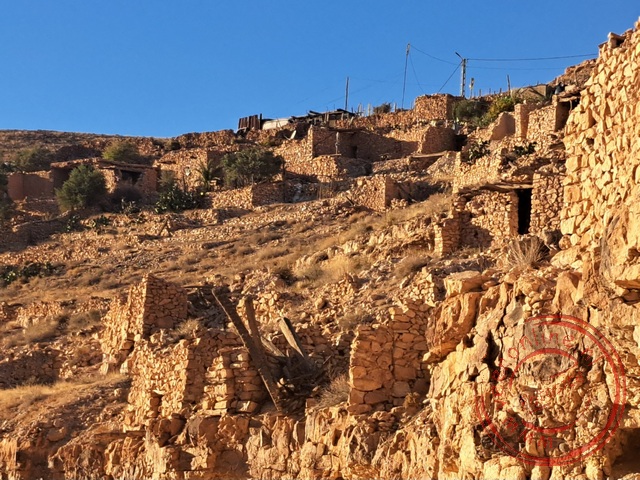
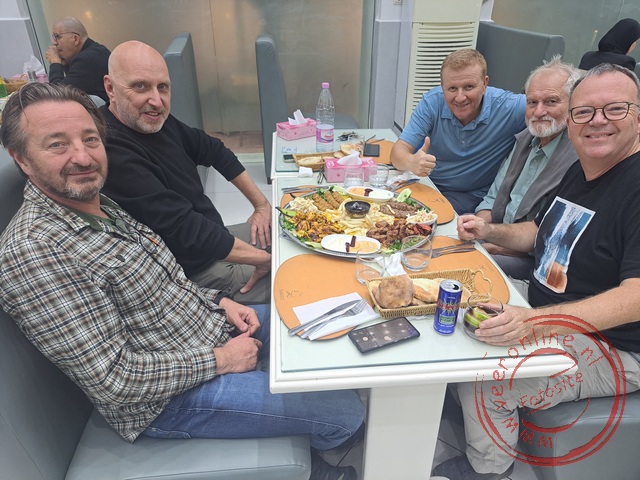
People have lived here since ancient times. In the 1970s, the last inhabitants left. All the houses now stand empty, most roofs collapsed. It is still over an hour’s drive to the center of Biskra. It is already dusk when we reach the old town. We drive through a maze of narrow streets where the souq of Biskra is located. Our hotel is on the edge of the souq—or so we thought. The hotel is overbooked. The reservation was made by the travel agency, but the hotel forgot to process it. No room is available. Another hotel is arranged a few hundred meters away. When we receive the room keys, the electronic key cards do not work. Even the second card fails. We are given an emergency key to open the door. In another room, this works fine, but our keyhole is covered by a plate. How do you remove it? After some fiddling by the hotel staff, they manage to remove the plate, and we can enter the room. In the evening, according to the driver, we should go to the newer part of town to eat. He drives us to a restaurant and we end up at Restaurant Damascus, a Syrian eatery. On another table, we see a large platter of meat for several people—it looks delicious. The five of us, including the driver who joins us, share it. A fine choice.
 Algeria
  The Arch of Trajan of Timgad
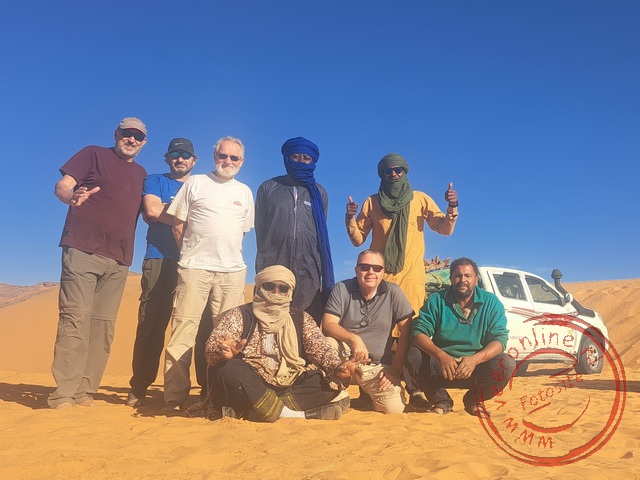 A photo with the crew
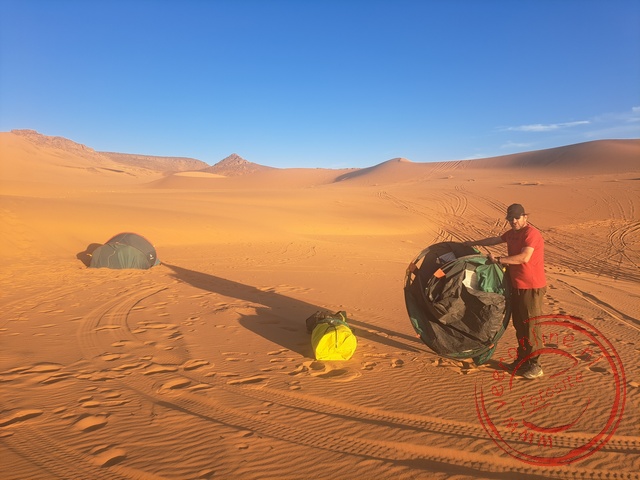 Setting up the tent in the desert
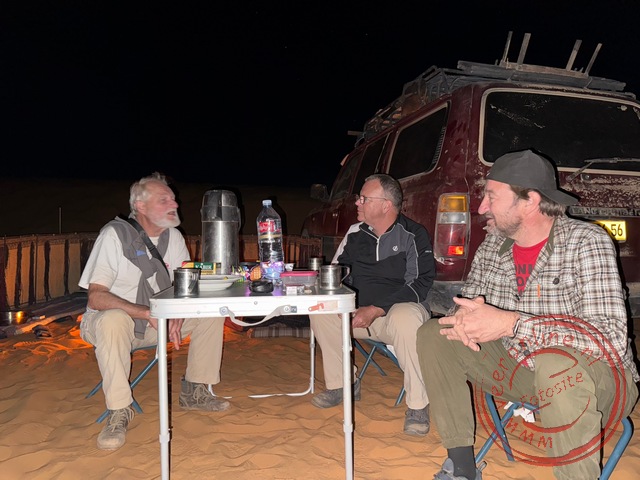 Eating in the desert in the dark
Travelogue Through the desert of Algeria
Dag 2 | Algeria > The old city of Djemila
Dag 3 | Algeria > The Bridges of Constantine
Dag 4 | Algeria > Timgad, Pompeii of Africa
Dag 5 | Algeria > Old Mosque in Sidi Okba
Dag 6 | Algeria > Ghardaïa in the Desert
Dag 7 | Algeria > The Cities of the M'Zab Valley
Dag 8 | Algeria > The Casbah of Algiers
Dag 9 | Algeria > The Roman City of Tipaza
Dag 10 | Algeria > Tassili N'Ajjer National Park
Dag 11 | Algeria > Rock Art in the Desert
Dag 12 | Algeria > Driving Between Rock Formations
Dag 13 | Algeria > Last Day in the Desert
Dag 14 | Algeria > Back in Djanet
Dag 15 | Algeria > Again No Luggage