
154 countries
(and areas)
 - Belize
- Benin
- Bhutan
- Bolivia
- Bonaire
- Bosnia and Herzegovina
- Botswana
- Brazil
- British Virgin Islands
- Brunei
- Bulgaria
- Cambodia
- Canada
- Cape Verde
- Chile
- China
- Costa Rica
- Croatia
- Cuba
- Curacao
- Cyprus
- Czech Republic
- Denmark
- Dominica
- Dominican Republic
- Egypt
- El Salvador
- England
- Estonia
- Eswatini (Swaziland)
- Ethiopia
- Fiji
- Finland
- France
- French Guiana
- Georgia
- Germany
- Gibraltar
- Greece
- Grenada
- Guadeloupe
- Guatemala
- Honduras
- Hong Kong
- Hungary
- Iceland
- India
- Indonesia
- Iran
- Ireland
- Israel
- Italy
- Jamaica
- Japan
- Jordan
- Kazakhstan
- Kenya
- Kosovo
- Kuwait
- Kyrgyzstan
- Laos
- Latvia
- Lebanon
- Lesotho
- Liechtenstein
- Lithuania
- Luxembourg
- Macau
- Madagascar
- Malawi
- Malaysia
- Maldives
- Malta
- Martinique
- Mexico
- Moldova
- Monaco
- Mongolia
- Montenegro
- Morocco
- Mozambique
- Namibia
- Nepal
- Netherlands
- New Zealand
- Nicaragua
- North Macedonia
- Northern Ireland
- Norway
- Oman
- Pakistan
- Palestine
- Peru
- Philippines
- Poland
- Portugal
- Qatar
- Republic of Korea
- Romania
- Russia
- Saint Kitts and Nevis
- Saint Lucia
- Saint Martin
- Saint Vincent and the Grenadines
- San Marino
- São Tomé and Principe
- Saudi Arabia
- Scotland
- Senegal
- Serbia
- Singapore
- Sint Maarten
- Slovakia
- Slovenia
- South Africa
- Spain
- Sri Lanka
- Suriname
- Sweden
- Switzerland
- Tajikistan
- Tanzania
- Thailand
- The Gambia
- Tibet
- Togo
- Transnistria
- Trinidad and Tobago
- Tunisia
- Turkey
- Turkmenistan
- Uganda
- United Arab Emirates
- United States
- Uruguay
- Uzbekistan
- Vatican City
- Vietnam
- Wales
- Zambia
- Zanzibar
- Belize
- Benin
- Bhutan
- Bolivia
- Bonaire
- Bosnia and Herzegovina
- Botswana
- Brazil
- British Virgin Islands
- Brunei
- Bulgaria
- Cambodia
- Canada
- Cape Verde
- Chile
- China
- Costa Rica
- Croatia
- Cuba
- Curacao
- Cyprus
- Czech Republic
- Denmark
- Dominica
- Dominican Republic
- Egypt
- El Salvador
- England
- Estonia
- Eswatini (Swaziland)
- Ethiopia
- Fiji
- Finland
- France
- French Guiana
- Georgia
- Germany
- Gibraltar
- Greece
- Grenada
- Guadeloupe
- Guatemala
- Honduras
- Hong Kong
- Hungary
- Iceland
- India
- Indonesia
- Iran
- Ireland
- Israel
- Italy
- Jamaica
- Japan
- Jordan
- Kazakhstan
- Kenya
- Kosovo
- Kuwait
- Kyrgyzstan
- Laos
- Latvia
- Lebanon
- Lesotho
- Liechtenstein
- Lithuania
- Luxembourg
- Macau
- Madagascar
- Malawi
- Malaysia
- Maldives
- Malta
- Martinique
- Mexico
- Moldova
- Monaco
- Mongolia
- Montenegro
- Morocco
- Mozambique
- Namibia
- Nepal
- Netherlands
- New Zealand
- Nicaragua
- North Macedonia
- Northern Ireland
- Norway
- Oman
- Pakistan
- Palestine
- Peru
- Philippines
- Poland
- Portugal
- Qatar
- Republic of Korea
- Romania
- Russia
- Saint Kitts and Nevis
- Saint Lucia
- Saint Martin
- Saint Vincent and the Grenadines
- San Marino
- São Tomé and Principe
- Saudi Arabia
- Scotland
- Senegal
- Serbia
- Singapore
- Sint Maarten
- Slovakia
- Slovenia
- South Africa
- Spain
- Sri Lanka
- Suriname
- Sweden
- Switzerland
- Tajikistan
- Tanzania
- Thailand
- The Gambia
- Tibet
- Togo
- Transnistria
- Trinidad and Tobago
- Tunisia
- Turkey
- Turkmenistan
- Uganda
- United Arab Emirates
- United States
- Uruguay
- Uzbekistan
- Vatican City
- Vietnam
- Wales
- Zambia
- Zanzibar


Copyright 2004 - 2026
Veeronline.nl Travel Adventures

Home > Algeria > Through the desert of Algeria > Travelogue day 3
Travelogue Through the desert of Algeria
November 8-22, 2025 (15 days)
Algeria > The Bridges of Constantine
Dag 3 - Monday, 10 November 2025Breakfast is served in the same location where we ate yesterday. The same waiters from yesterday are present again—they work long hours. I order an omelet and take a croissant with cheese. At nine o’clock, we meet the driver, whose name is a bit too difficult to remember, and Nehla. I had expected we would walk to the old center of Constantine today, but that distance turns out to be too far. Instead, we drive to the Emir Abdelkader Mosque. After independence, this mosque was built in 1972 to accommodate around 20,000 worshippers. I take off my shoes and enter the prayer hall. The mosque is beautifully constructed. The dome is 64 meters high, Nehla tells us. Sunlight shines through the stained glass, casting colorful patterns on the carpet. Next to the mosque is the Quranic school, where believers practice their prayers. After visiting the mosque, we continue to the Cirta Museum. Here, unique mosaics from ancient Constantine are displayed, along with many archaeological finds. The city of Constantine was founded around 600 BC under the name Cirta, originally a Numidian settlement. Due to its strategic location on a steep cliff, the city grew into an important center of the Numidian kingdom. In the fifth century, the Roman leader Constantine the Great conquered the city and renamed it after himself.

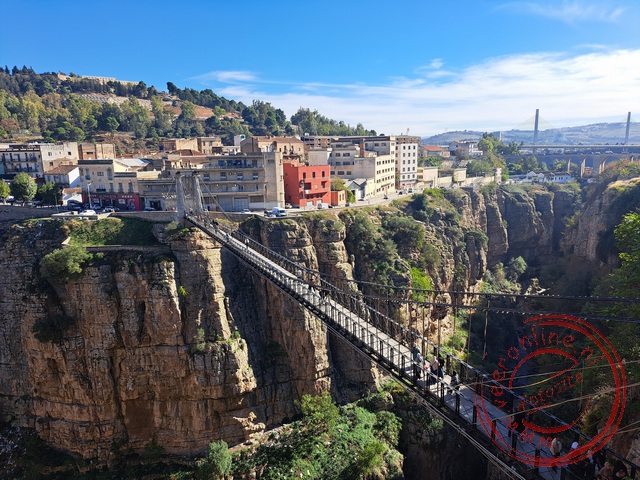
Using a scale model of Constantine, Nehla shows us how the deep Rhumel Gorge runs along the city. Several bridges have been built across the gorge. The 168-meter-long Sidi M’Cid Bridge, built in 1912, was for a long time the highest bridge in the world. The bridges over the deep gorge give Constantine its nickname: “The City of Suspended Bridges.” After the museum, we order coffee at a café. Only men are sitting inside. The coffee choices are limited—strong coffee, optionally with sugar. Since I usually drink my coffee with milk, the strong brew doesn’t suit me. The cake we order alongside it tastes better. We drive further down to the base of the gorge. When I step out, I see the Sidi M’Cid Bridge towering above me. Below, water plunges from the gorge via a waterfall. In the past, residents of the old city carved tunnels into the rocks to escape in case of an attack.

These tunnels led to the gorge. We pass several entrances as we follow the river upstream. Part of the path runs through the rocks. It is remarkable how they carved the rocks without explosives. The view of the gorge, the fast-flowing river, and the bridges is stunning. At the top of the cliffs stands the war monument, Monument aux Morts, which is our next destination. From here, we continue on foot. The driver will pick us up at the end of the day. At the monument, we start talking with two Algerian boys—one from Algiers, the other from Biskra, the city we will visit tomorrow. I am surprised they have never been to Constantine before. From the monument, we walk across the Sidi M’Cid Bridge, which is 175 meters high. On the other side begins the Kasbah, a network of narrow and lively streets. In the middle lies the Ahmed Bey Palace. This palace is one of the finest examples of 19th-century Ottoman-Algerian architecture.

Built between 1826 and 1835 by Ahmed Bey, the last Beylik ruler of Eastern Algeria, the palace has three large courtyards surrounded by columned arcades. The walls are adorned with tile mosaics, woodcarvings, and paintings. Ahmed Bey did not enjoy the palace long—French forces captured the city in 1837. The palace is now being restored to preserve it for the future. Feeling hungry, we stop at a restaurant and order soup with a rolled and fried bread filled with potatoes. It tastes excellent. Near the restaurant is a suspension bridge over the gorge. We cross the gorge and return via the original access bridge, which had served as the city entrance since Roman times but was destroyed during the French invasion in 1837. We descend stairs into the gorge to the remnants of the original bridge, then climb up the other side. Here, the tour ends. There is still enough time to drive to Constantine Airport. Milko’s suitcase was supposed to be delivered by car, but customs in Algiers does not allow anyone else to pick it up—even with yesterday’s emailed form. He received confirmation that the bag was sent on the morning flight to Constantine.
The flight number inspires confidence. When we reach the airport during busy evening traffic, the suitcase is not there. The staff member can only say, “It’s not here.” Sigh. Perhaps it will arrive with the evening flight or around midnight—no one seems to know. The driver suggests trying the airport again tomorrow morning. He is keeping in contact with the airport and has a friend there. He will start at five a.m. tomorrow and watch for the bag. Around 5:30 p.m., we arrive at the hotel. In the lobby, we first order a beer. We didn’t enjoy the hotel food yesterday, so we look for a nearby restaurant. Nothing appears on the street of the hotel. Only when we turn a corner do we enter the restaurant district. We choose a pizza and taco restaurant. The two pizzas we share between the four of us are enormous and barely fit on the table—we cannot finish them.
 Algeria
 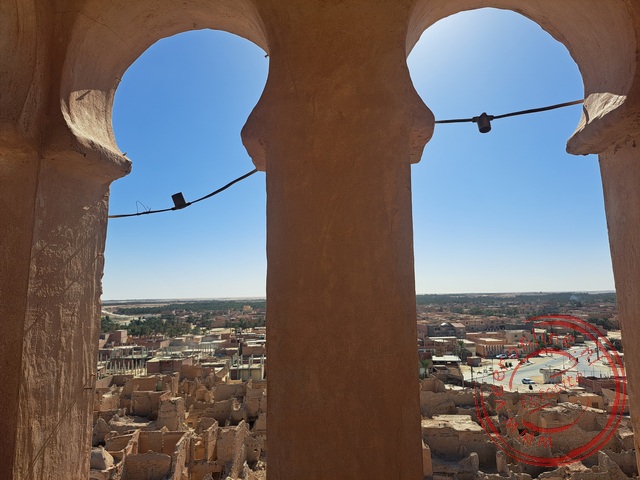 View over the old adobe town of Tamacine
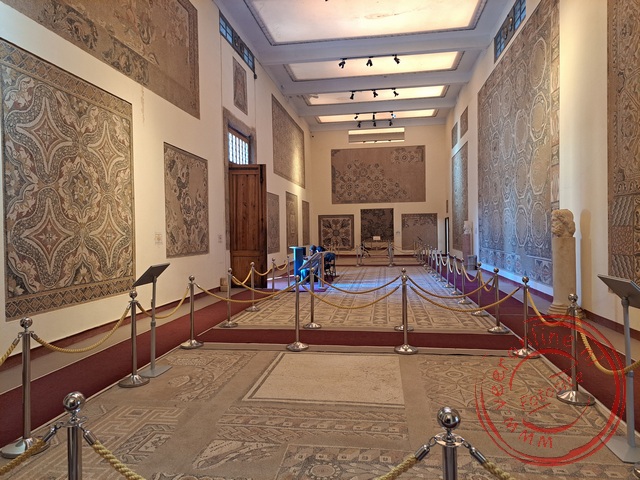 The ancient mosaics in the museum at Timgad
 The ancient Roman entrance gate of Djemila
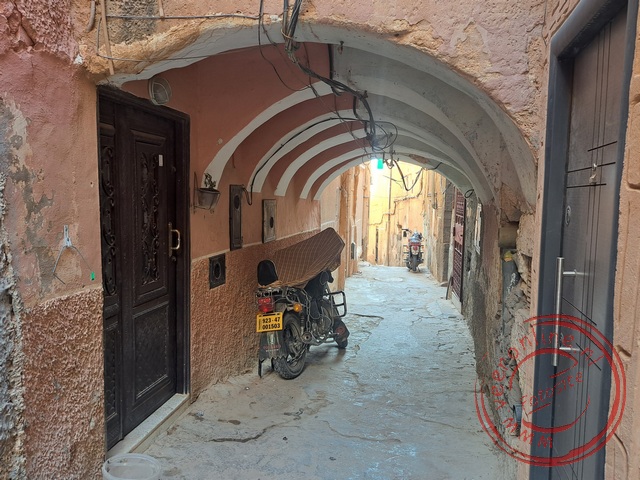 The covered streets provide shade in summer
Travelogue Through the desert of Algeria
Dag 2 | Algeria > The old city of Djemila
Dag 3 | Algeria > The Bridges of Constantine
Dag 4 | Algeria > Timgad, Pompeii of Africa
Dag 5 | Algeria > Old Mosque in Sidi Okba
Dag 6 | Algeria > Ghardaïa in the Desert
Dag 7 | Algeria > The Cities of the M'Zab Valley
Dag 8 | Algeria > The Casbah of Algiers
Dag 9 | Algeria > The Roman City of Tipaza
Dag 10 | Algeria > Tassili N'Ajjer National Park
Dag 11 | Algeria > Rock Art in the Desert
Dag 12 | Algeria > Driving Between Rock Formations
Dag 13 | Algeria > Last Day in the Desert
Dag 14 | Algeria > Back in Djanet
Dag 15 | Algeria > Again No Luggage