
154 countries
(and areas)
 - Belize
- Benin
- Bhutan
- Bolivia
- Bonaire
- Bosnia and Herzegovina
- Botswana
- Brazil
- British Virgin Islands
- Brunei
- Bulgaria
- Cambodia
- Canada
- Cape Verde
- Chile
- China
- Costa Rica
- Croatia
- Cuba
- Curacao
- Cyprus
- Czech Republic
- Denmark
- Dominica
- Dominican Republic
- Egypt
- El Salvador
- England
- Estonia
- Eswatini (Swaziland)
- Ethiopia
- Fiji
- Finland
- France
- French Guiana
- Georgia
- Germany
- Gibraltar
- Greece
- Grenada
- Guadeloupe
- Guatemala
- Honduras
- Hong Kong
- Hungary
- Iceland
- India
- Indonesia
- Iran
- Ireland
- Israel
- Italy
- Jamaica
- Japan
- Jordan
- Kazakhstan
- Kenya
- Kosovo
- Kuwait
- Kyrgyzstan
- Laos
- Latvia
- Lebanon
- Lesotho
- Liechtenstein
- Lithuania
- Luxembourg
- Macau
- Madagascar
- Malawi
- Malaysia
- Maldives
- Malta
- Martinique
- Mexico
- Moldova
- Monaco
- Mongolia
- Montenegro
- Morocco
- Mozambique
- Namibia
- Nepal
- Netherlands
- New Zealand
- Nicaragua
- North Macedonia
- Northern Ireland
- Norway
- Oman
- Pakistan
- Palestine
- Peru
- Philippines
- Poland
- Portugal
- Qatar
- Republic of Korea
- Romania
- Russia
- Saint Kitts and Nevis
- Saint Lucia
- Saint Martin
- Saint Vincent and the Grenadines
- San Marino
- São Tomé and Principe
- Saudi Arabia
- Scotland
- Senegal
- Serbia
- Singapore
- Sint Maarten
- Slovakia
- Slovenia
- South Africa
- Spain
- Sri Lanka
- Suriname
- Sweden
- Switzerland
- Tajikistan
- Tanzania
- Thailand
- The Gambia
- Tibet
- Togo
- Transnistria
- Trinidad and Tobago
- Tunisia
- Turkey
- Turkmenistan
- Uganda
- United Arab Emirates
- United States
- Uruguay
- Uzbekistan
- Vatican City
- Vietnam
- Wales
- Zambia
- Zanzibar
- Belize
- Benin
- Bhutan
- Bolivia
- Bonaire
- Bosnia and Herzegovina
- Botswana
- Brazil
- British Virgin Islands
- Brunei
- Bulgaria
- Cambodia
- Canada
- Cape Verde
- Chile
- China
- Costa Rica
- Croatia
- Cuba
- Curacao
- Cyprus
- Czech Republic
- Denmark
- Dominica
- Dominican Republic
- Egypt
- El Salvador
- England
- Estonia
- Eswatini (Swaziland)
- Ethiopia
- Fiji
- Finland
- France
- French Guiana
- Georgia
- Germany
- Gibraltar
- Greece
- Grenada
- Guadeloupe
- Guatemala
- Honduras
- Hong Kong
- Hungary
- Iceland
- India
- Indonesia
- Iran
- Ireland
- Israel
- Italy
- Jamaica
- Japan
- Jordan
- Kazakhstan
- Kenya
- Kosovo
- Kuwait
- Kyrgyzstan
- Laos
- Latvia
- Lebanon
- Lesotho
- Liechtenstein
- Lithuania
- Luxembourg
- Macau
- Madagascar
- Malawi
- Malaysia
- Maldives
- Malta
- Martinique
- Mexico
- Moldova
- Monaco
- Mongolia
- Montenegro
- Morocco
- Mozambique
- Namibia
- Nepal
- Netherlands
- New Zealand
- Nicaragua
- North Macedonia
- Northern Ireland
- Norway
- Oman
- Pakistan
- Palestine
- Peru
- Philippines
- Poland
- Portugal
- Qatar
- Republic of Korea
- Romania
- Russia
- Saint Kitts and Nevis
- Saint Lucia
- Saint Martin
- Saint Vincent and the Grenadines
- San Marino
- São Tomé and Principe
- Saudi Arabia
- Scotland
- Senegal
- Serbia
- Singapore
- Sint Maarten
- Slovakia
- Slovenia
- South Africa
- Spain
- Sri Lanka
- Suriname
- Sweden
- Switzerland
- Tajikistan
- Tanzania
- Thailand
- The Gambia
- Tibet
- Togo
- Transnistria
- Trinidad and Tobago
- Tunisia
- Turkey
- Turkmenistan
- Uganda
- United Arab Emirates
- United States
- Uruguay
- Uzbekistan
- Vatican City
- Vietnam
- Wales
- Zambia
- Zanzibar


Copyright 2004 - 2026
Veeronline.nl Travel Adventures

Home > Netherlands > Discovering Northern Netherlands > Travelogue day 1
Travelogue Discovering Northern Netherlands
June 20 July 4 2021 (15 days)
Netherlands > Getting to Know Sneek
Dag 1 - Sunday 20 June 2021It is Sunday morning, just before noon. I close the door behind me and head toward Sneek. To avoid the traffic jams around the Amsterdam ring road, I take the A7 toward the Afsluitdijk. This turns out to be a bad choice. Just after the Coen Tunnel, red crosses appear above the lanes. Five lanes are closed. All traffic must move to the shoulder. This immediately causes a major delay. Apparently, there was a serious accident just ahead of me. Police and ambulances rush past on the shoulder, followed shortly by two tow trucks. I crawl forward slowly. When I get closer, I see that the traffic isn’t being directed over the shoulder but through a gas station’s premises. The main highway is completely closed. Twenty minutes later, as I enter the gas station, I see a caravan jackknifed on its side on the main road. Together with the car, it practically blocks the entire highway. I estimate there were no injuries in this accident. I consider myself lucky to have been relatively near the front of the jam. The delay behind me is enormous. I continue driving toward the Afsluitdijk. Due to the delay, I arrive in Sneek around two o’clock. I had reserved a time slot at the Frisian Maritime Museum for 2 PM. Hopefully, being a little late won’t be a problem. I park near the Bed and Breakfast on Looxmastraat and walk into the center. At the museum, no one even checks the arrival time. I’m told there is no fixed route to follow. In the room behind the reception, there is a short introductory video about the museum. I also receive a map to keep track of where I am. The first exhibition is about the skûtsjes. These flat-bottomed boats were useful vessels for navigating shallow waters. Farmers used punts to harvest their goods. Later, tow boats transported goods further inland. Among the modern sailing yachts, a BM catches my eye. This relatively inexpensive boat was designed by Hendrik Bulthuis. He wanted to make sailing accessible to ordinary people. The name is derived from the Bergumermeer, something I didn’t know. Later, he also designed a slightly larger model, the sixteen-square sailing boat. This name referred to the sail area, which was the maximum size before one had to pay the “personal tax for pleasure craft.” The museum has a temporary exhibition about whaling. Whereas whale hunters were once seen as heroic seafarers, they are now regarded more as killers of these gigantic animals.

In the Netherlands, whaling continued until 1964. The practice stopped not because of public pressure but because it was no longer profitable. There were simply too few animals left, and competition from other countries was fierce. Public opinion only changed later. I leave the museum and walk along the canal toward my accommodation. I received a code to retrieve the key from a locker. That works, but I can’t get the front door open. Am I at the right door? The homeowner’s son helps by opening the door from the inside. It turns out the door is sticking after a recent paint job. I enter a nice place with a bedroom and a living room with a small kitchen. Marco also arrives in Sneek. He traveled by train to Heerenveen and cycled the last part on his electric bike. Together we stroll through Sneek. We wander through the streets until we reach the famous Waterpoort of Sneek. The water gate, with its octagonal towers, was built in 1613 as part of the city wall. The gate was meant to protect the waterway. At that time, trade mainly arrived by water. Sneek once had four water gates, but only one has been preserved. At the end of the 19th century, there was a plan to demolish this gate as well because it was too low for the newer steamships. Fortunately, the plan was revised in time. In the city center, at the Marktplein, we sit down at a terrace of restaurant De Walrus. After a beer, we decide to eat here as well. It’s a nice spot where clearly many Sneek residents gather.
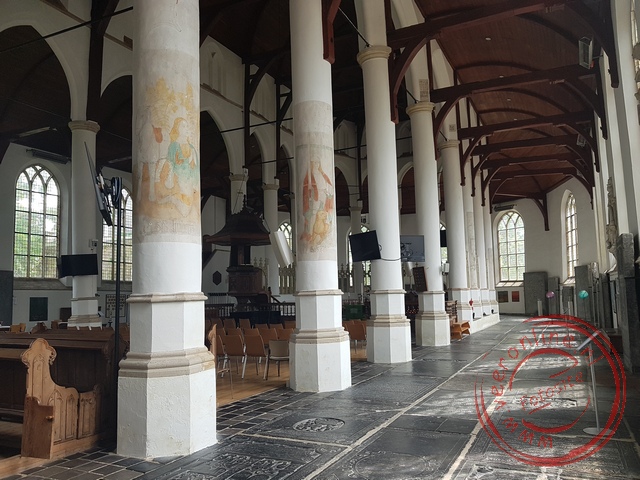 The interior of St Martini Church in Franeker
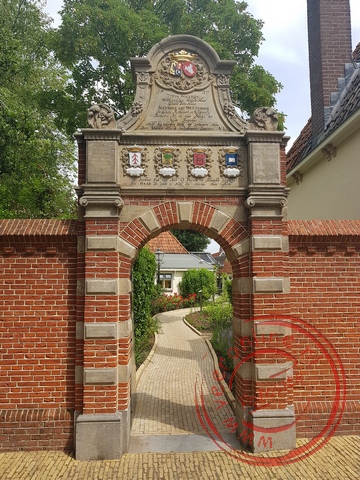 The entrance to the Westerhuis Womens Guesthouse
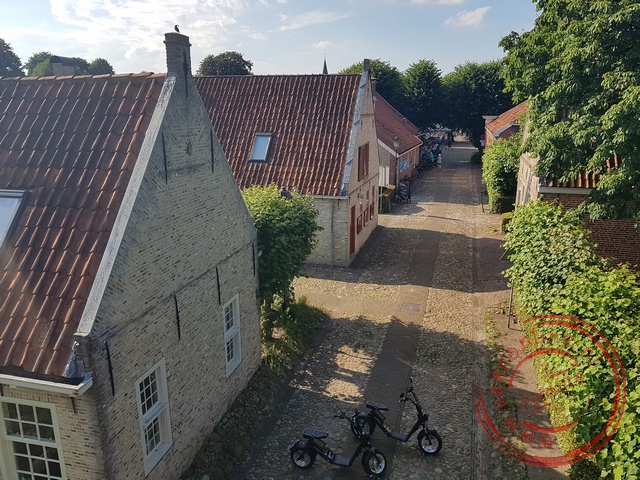 Today you can spend the night in the former soldiers quarters
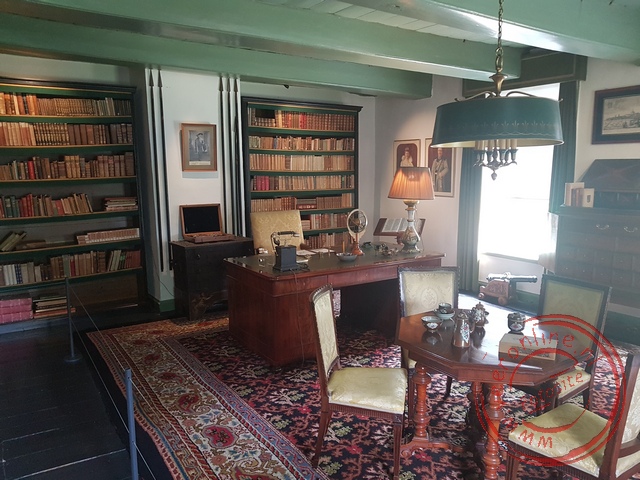 The interior of the Fraeylemaborg Manor House
Travelogue Discovering Northern Netherlands
Dag 2 | Netherlands > The Eleven Alley Tour
Dag 3 | Netherlands > From Stavoren to Workum
Dag 4 | Netherlands > The Brekken Path
Dag 5 | Netherlands > Harlingen and Terschelling
Dag 6 | Netherlands > Touring Terschelling
Dag 7 | Netherlands > The Oldest Planetarium
Dag 8 | Netherlands > Boating through Alde Feanen
Dag 9 | Netherlands > View over the Lauwersmeer
Dag 10 | Netherlands > Cycling on Schiermonnikoog
Dag 11 | Netherlands > The Groninger 'Wierde” Villages
Dag 12 | Netherlands > Climbing the Martini Tower
Dag 13 | Netherlands > The Hanging Kitchens
Dag 14 | Netherlands > Dutch History
Dag 15 | Netherlands > House in Wedde