
154 countries
(and areas)
 - Belize
- Benin
- Bhutan
- Bolivia
- Bonaire
- Bosnia and Herzegovina
- Botswana
- Brazil
- British Virgin Islands
- Brunei
- Bulgaria
- Cambodia
- Canada
- Cape Verde
- Chile
- China
- Costa Rica
- Croatia
- Cuba
- Curacao
- Cyprus
- Czech Republic
- Denmark
- Dominica
- Dominican Republic
- Egypt
- El Salvador
- England
- Estonia
- Eswatini (Swaziland)
- Ethiopia
- Fiji
- Finland
- France
- French Guiana
- Georgia
- Germany
- Gibraltar
- Greece
- Grenada
- Guadeloupe
- Guatemala
- Honduras
- Hong Kong
- Hungary
- Iceland
- India
- Indonesia
- Iran
- Ireland
- Israel
- Italy
- Jamaica
- Japan
- Jordan
- Kazakhstan
- Kenya
- Kosovo
- Kuwait
- Kyrgyzstan
- Laos
- Latvia
- Lebanon
- Lesotho
- Liechtenstein
- Lithuania
- Luxembourg
- Macau
- Madagascar
- Malawi
- Malaysia
- Maldives
- Malta
- Martinique
- Mexico
- Moldova
- Monaco
- Mongolia
- Montenegro
- Morocco
- Mozambique
- Namibia
- Nepal
- Netherlands
- New Zealand
- Nicaragua
- North Macedonia
- Northern Ireland
- Norway
- Oman
- Pakistan
- Palestine
- Peru
- Philippines
- Poland
- Portugal
- Qatar
- Republic of Korea
- Romania
- Russia
- Saint Kitts and Nevis
- Saint Lucia
- Saint Martin
- Saint Vincent and the Grenadines
- San Marino
- São Tomé and Principe
- Saudi Arabia
- Scotland
- Senegal
- Serbia
- Singapore
- Sint Maarten
- Slovakia
- Slovenia
- South Africa
- Spain
- Sri Lanka
- Suriname
- Sweden
- Switzerland
- Tajikistan
- Tanzania
- Thailand
- The Gambia
- Tibet
- Togo
- Transnistria
- Trinidad and Tobago
- Tunisia
- Turkey
- Turkmenistan
- Uganda
- United Arab Emirates
- United States
- Uruguay
- Uzbekistan
- Vatican City
- Vietnam
- Wales
- Zambia
- Zanzibar
- Belize
- Benin
- Bhutan
- Bolivia
- Bonaire
- Bosnia and Herzegovina
- Botswana
- Brazil
- British Virgin Islands
- Brunei
- Bulgaria
- Cambodia
- Canada
- Cape Verde
- Chile
- China
- Costa Rica
- Croatia
- Cuba
- Curacao
- Cyprus
- Czech Republic
- Denmark
- Dominica
- Dominican Republic
- Egypt
- El Salvador
- England
- Estonia
- Eswatini (Swaziland)
- Ethiopia
- Fiji
- Finland
- France
- French Guiana
- Georgia
- Germany
- Gibraltar
- Greece
- Grenada
- Guadeloupe
- Guatemala
- Honduras
- Hong Kong
- Hungary
- Iceland
- India
- Indonesia
- Iran
- Ireland
- Israel
- Italy
- Jamaica
- Japan
- Jordan
- Kazakhstan
- Kenya
- Kosovo
- Kuwait
- Kyrgyzstan
- Laos
- Latvia
- Lebanon
- Lesotho
- Liechtenstein
- Lithuania
- Luxembourg
- Macau
- Madagascar
- Malawi
- Malaysia
- Maldives
- Malta
- Martinique
- Mexico
- Moldova
- Monaco
- Mongolia
- Montenegro
- Morocco
- Mozambique
- Namibia
- Nepal
- Netherlands
- New Zealand
- Nicaragua
- North Macedonia
- Northern Ireland
- Norway
- Oman
- Pakistan
- Palestine
- Peru
- Philippines
- Poland
- Portugal
- Qatar
- Republic of Korea
- Romania
- Russia
- Saint Kitts and Nevis
- Saint Lucia
- Saint Martin
- Saint Vincent and the Grenadines
- San Marino
- São Tomé and Principe
- Saudi Arabia
- Scotland
- Senegal
- Serbia
- Singapore
- Sint Maarten
- Slovakia
- Slovenia
- South Africa
- Spain
- Sri Lanka
- Suriname
- Sweden
- Switzerland
- Tajikistan
- Tanzania
- Thailand
- The Gambia
- Tibet
- Togo
- Transnistria
- Trinidad and Tobago
- Tunisia
- Turkey
- Turkmenistan
- Uganda
- United Arab Emirates
- United States
- Uruguay
- Uzbekistan
- Vatican City
- Vietnam
- Wales
- Zambia
- Zanzibar


Copyright 2004 - 2026
Veeronline.nl Travel Adventures
Home > Costa Rica > Tour of Costa Rica > Travelogue day 5
Travelogue Tour of Costa Rica
720 September 2008 (14 days)
Costa Rica > Visiting the Bribri Indians
Dag 5 - Thursday, September 11, 2008Despite the late night, I wake up early. I decide to get out of bed and head to the beach with my camera. It’s six o’clock in the morning. By the time I reach the black sand beach, I’ve already missed the sunrise. I take photos of the sea and of the little birds around the shore. More of our group members are strolling along the beach, and a few walkers are out with their dogs. The sun is already very strong this early, which is going to be something to deal with today if it stays sunny.

After breakfast, our guide George picks us up for an excursion to an indigenous village near the border with Panama. George is like a living version of Steve Irwin, complete with a large Texan hat. We drive by bus to the village of Bribri, the last settlement before entering the Bribri Nature Reserve. In the village, we buy some drinks and toys for the children. Just outside Bribri, we enter the reserve, which shares the same name. About 10,000 indigenous people live here in isolated communities, maintaining their own language and culture. Before visiting the tribe, George explains about the cacao fruit. He opens one and lets us taste the cacao bean. The bean itself is not edible, but the surrounding pulp is sweet and juicy. Then we walk across a rickety suspension bridge to the village. We must keep a distance on the bridge, with a maximum of four people at a time. This rule is definitely not unnecessary. Safely, we arrive in the small village. The village chief is reportedly 106 years old. He settled here long ago, and now six generations live in the village. The chief greets us from his hammock. We may ask him questions, which George translates into Spanish. This gives me a chance to practice my Spanish right away. We hand out the toys to the children, though the balloons don’t last long. We also visit the kitchen of the house. After about forty-five minutes, we say goodbye to the family.

We drive a short distance further to visit the medicine man. He takes us into the forest and demonstrates how every tree, bush, and fruit can be used. With ease, he twists a few leaves into a strong rope with two strands. Then he colors the rope red and orange using fruits. After visiting the Bribri people, we continue to the waterfall. The bus drives us as far as possible, and then we continue on foot. Occasionally, we walk through the water. Along a slippery path, we reach the waterfall in about fifteen minutes—a twenty-meter stream in a narrow basin. Several tourists are already there. The final stretch requires wading through water. George helps us onto the shore. Just as I try to pass him, I slip back into the water on the wet rocks. Luckily, I manage to keep my camera dry. Monique slips behind me as well, and her camera bag hits the water. Fortunately, no one is hurt. I quickly change and take a proper dip under the waterfall. The water is quite chilly under the powerful stream. Around two o’clock, we have lunch at a small restaurant in Bribri with BBR. Then we drive back to Cahuita. Just before Cahuita, Marco and Karin get off at the hospital for advice on ear pain. We continue and arrive back at the lodge around 3:30 p.m. At the pool, I order a beer and swim a few laps. From the chairs by the pool, I can see a sloth in the tree, slowly climbing higher. It’s amusing to watch how slowly it moves—almost like slow motion. In the evening, there’s a barbecue at the lodge—the same as two days ago, but now with my own travel group.
 Costa Rica
 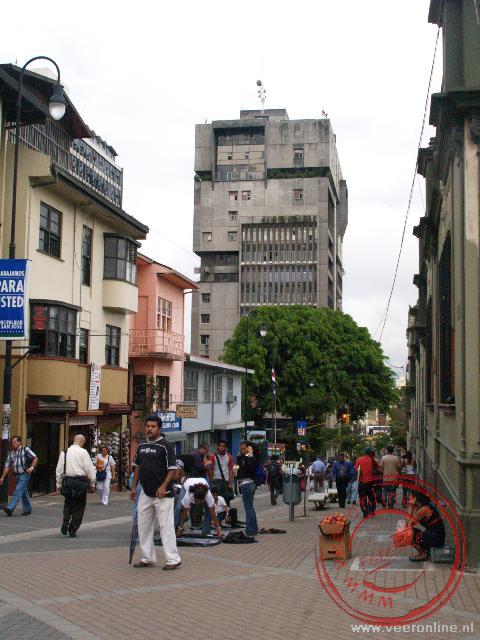 The street scene of San Jose
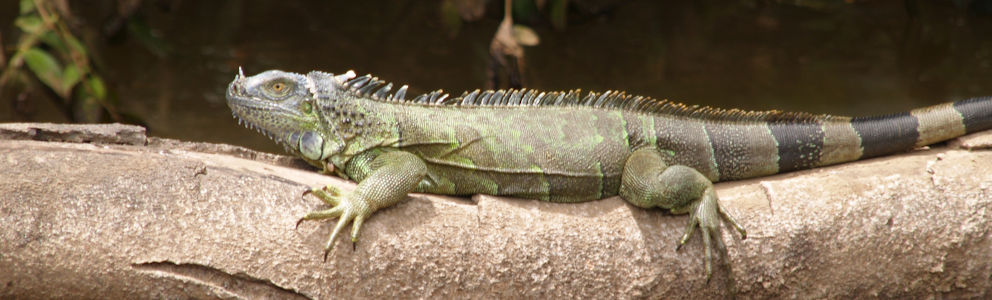
 A Black Guan in the bushes A Black Guan grows to about 65 cm
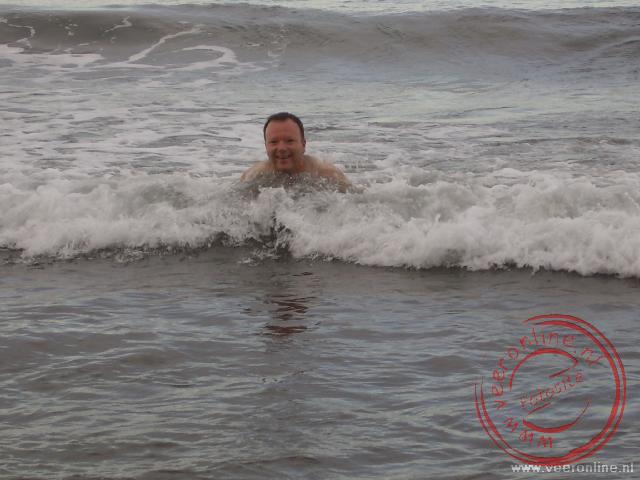 Swimming in the Caribbean Sea
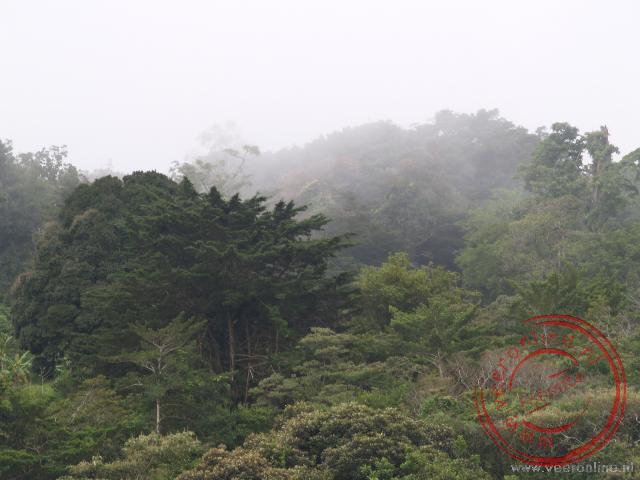 The Monteverde cloud forest
Travelogue Tour of Costa Rica
Dag 2 | Costa Rica > The Poás volcano out of the clouds
Dag 3 | Costa Rica > We are still not complete...
Dag 4 | Costa Rica > An encounter with a stingray
Dag 5 | Costa Rica > Visiting the Bribri Indians
Dag 6 | Costa Rica > Rafting on the Rio Sarapiquí
Dag 7 | Costa Rica > Birthday in Caño Negro, ¡Pura Vida!
Dag 8 | Costa Rica > Meeting Jan
Dag 9 | Costa Rica > Canopy between the treetops
Dag 10 | Costa Rica > Travel companions robbed!
Dag 11 | Costa Rica > Manuel Antonio: one big zoo
Dag 12 | Costa Rica > Back to San José
Dag 13 | Costa Rica > Will we catch the flight?
Dag 14 | Costa Rica > Back home